
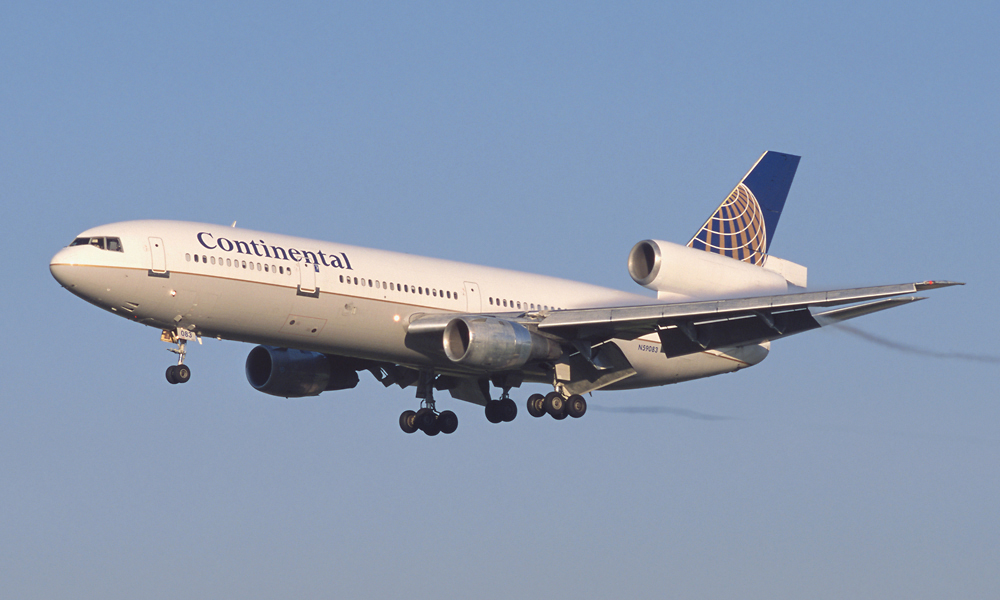
In the mid‑1960s, American Airlines signalled to aircraft manufacturers that they required a new
widebody jet — one larger than the Douglas DC‑8 but smaller and more versatile than the Boeing 747.
Their goal was to open new long‑range markets using an aircraft capable of operating from airports
that could not support the 747’s size. This requirement set the stage for a new generation of
widebody airliners.
In 1967, the same year Douglas Aircraft Company merged with McDonnell Aircraft, early design studies
explored a double‑deck aircraft capable of carrying 550 passengers. That concept was soon abandoned
in favour of a more practical solution: a widebody tri‑jet seating 399 passengers, built around the
length of the DC‑8 Super 60. This design became the foundation of the McDonnell Douglas DC‑10.
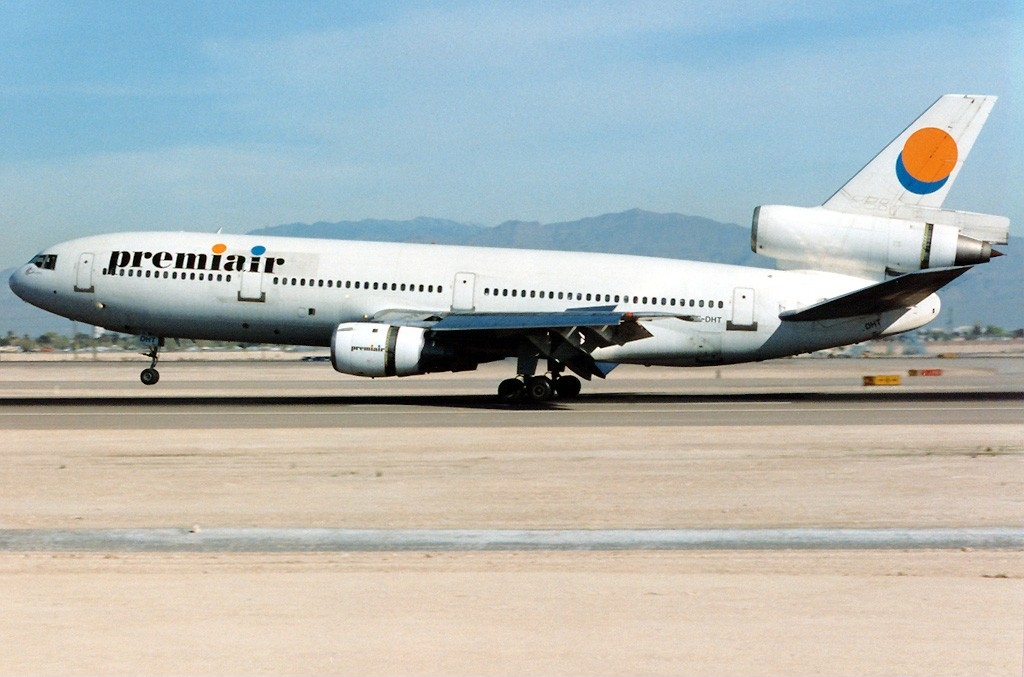
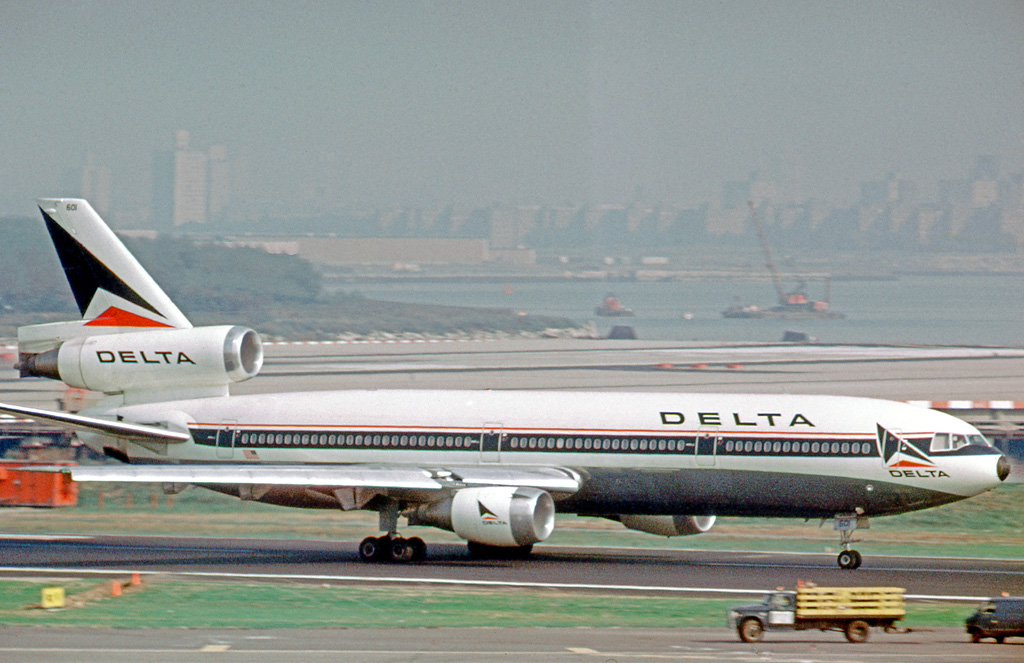
The DC‑10 adopted a three‑engine configuration — one under each wing and a third mounted at the base
of the vertical stabiliser in a straight‑through tail nacelle. This layout satisfied the prevailing
U.S. regulatory preference for three‑engined aircraft on extended overwater routes, long before
ETOPS would allow twin‑engine jets to dominate long‑haul flying.
On 19 February 1968, American Airlines formally announced its intention to purchase the DC‑10,
selecting the Rolls‑Royce RB211 engine. United Airlines followed later that year with its own order,
and the DC‑10 programme was officially launched.
The first variant, the DC‑10‑10, was designed for domestic U.S. operations, offering a range of
6,100 kilometres (3,800 miles). Its maiden flight took place on 29 August 1970, followed by an
intensive certification programme of 929 flights totalling 1,551 hours. FAA certification was
granted on 29 July 1971.
American Airlines inaugurated commercial DC‑10 service on 5 August 1971 with a flight from Los
Angeles to Chicago. United Airlines commenced its own DC‑10 operations shortly after, marking the
beginning of the aircraft’s entry into mainstream widebody service.

At‑a‑Glance.
| DC‑10 Variant | Key Facts |
|---|---|
| Launch Customer | American Airlines (announced 19 February 1968) |
| First Flight | 29 August 1970 (DC‑10‑10) |
| Certification | FAA certification granted 29 July 1971 |
| Entry Into Service | 5 August 1971 — American Airlines (Los Angeles to Chicago) |
| Engines | GE CF6‑6D (‑10), GE CF6‑50C (‑30), PW JT9D‑59A (‑40) |
| Passenger Capacity | 270 (typical) — 222 Economy / 48 Business |
| Range |
DC‑10‑10: 6,500 km / 3,500 nm DC‑10‑30: 9,600 km / 5,200 nm DC‑10‑40: 9,400 km / 5,100 nm |
| Total Produced | 446 aircraft |
| Production Years | 1970 – 1988 |
| Final Delivery | July 1989 — Nigerian Airways |
Development Timeline.
1966 — American Airlines defines the requirement
American Airlines announces its need for a new widebody jet: larger than the Douglas DC‑8 but
smaller and more airport‑friendly than the Boeing 747. The aim is to open new long‑range markets
using an aircraft capable of operating from smaller airfields.
1967 — McDonnell and Douglas merge
The newly formed McDonnell Douglas Corporation studies early concepts, including a double‑deck
widebody seating 550 passengers. This design is abandoned in favour of a tri‑jet layout seating
399 passengers, based on the DC‑8 Super 60 fuselage length.
1968 — DC‑10 officially launched
On 19 February 1968, American Airlines President George A. Spater and James S. McDonnell announce
American’s intention to purchase the DC‑10, selecting the Rolls‑Royce RB211 engine. United Airlines
follows later that year with an order for 30 aircraft plus 30 options.
1968–1970 — Design finalisation
The DC‑10 adopts a three‑engine configuration: two underwing engines and a straight‑through tail
engine mounted at the base of the vertical stabiliser. The aircraft is positioned as the successor
to the DC‑8 on mid‑ to long‑haul routes.
29 August 1970 — Maiden flight
The first DC‑10‑10 takes to the air, beginning an intensive certification programme.
1970–1971 — Certification testing
The DC‑10 undergoes 929 test flights totalling 1,551 hours. Systems, handling, and performance are
evaluated across domestic and long‑range profiles.
29 July 1971 — FAA certification
The DC‑10‑10 receives FAA approval, clearing the way for commercial service.
5 August 1971 — Entry into service
American Airlines launches the first DC‑10 passenger service between Los Angeles and Chicago.
United Airlines begins operations shortly afterwards, on 16 August 1971.
Early 1970s — Variant development
McDonnell Douglas develops the DC‑10‑15 for “hot and high” domestic operations, followed by the
DC‑10‑30 for long‑haul international routes. The DC‑10‑40 is introduced at the request of Northwest
Orient Airlines, who sought a designation reflecting its improved performance.
1972 — DC‑10‑30 launch
KLM and Swissair receive the first DC‑10‑30s on 21 November 1972. Swissair operates the first
commercial DC‑10‑30 service on 15 December 1972.
1974 — Cargo door redesign
Following two explosive‑decompression accidents caused by an outward‑opening cargo door, the FAA
mandates structural and mechanical improvements. The redesigned system eliminates the fault.
1979 — Temporary grounding
After the loss of American Airlines Flight 191 due to improper maintenance procedures, the FAA
rescinds DC‑10‑10 certification on 6 June 1979. Certification is reinstated on 13 July 1979 after
slat‑locking and hydraulic‑system modifications.
1988 — Final production
The last DC‑10 is completed at Long Beach in December 1988 and delivered to Nigerian Airways in
July 1989. A total of 446 aircraft are built, surpassing the original break‑even estimate of 438.
1990s — Successor models
The DC‑10 is succeeded by the MD‑10 and MD‑11. After Boeing’s 1997 merger with McDonnell Douglas,
the MD‑11 receives a glass cockpit upgrade, eliminating the need for a flight engineer.
History.
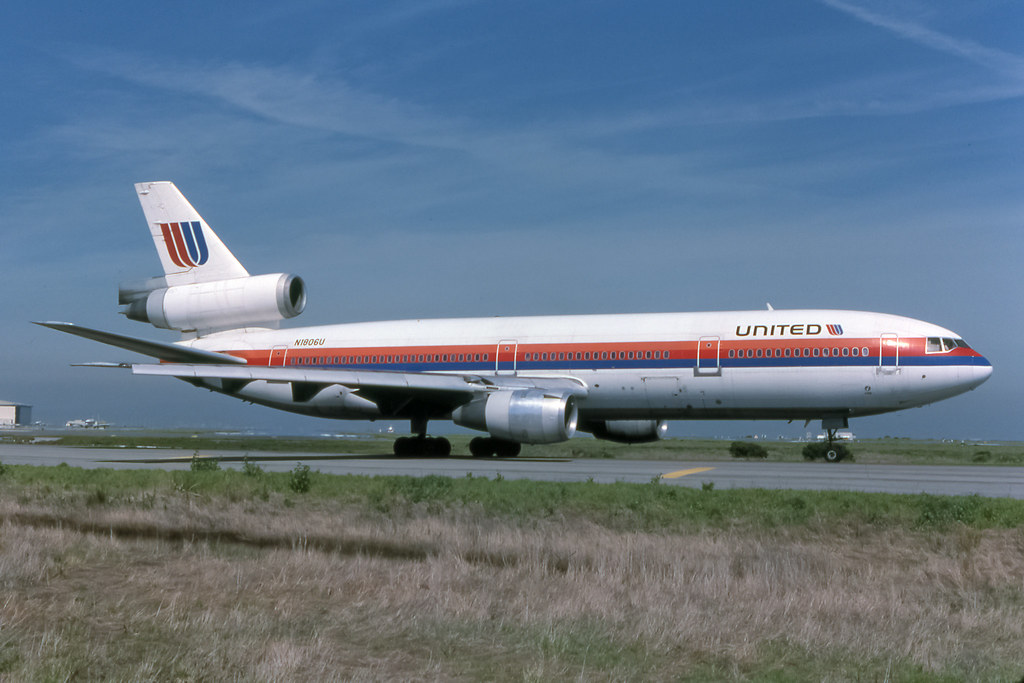
The McDonnell Douglas DC‑10 entered service during a period of rapid expansion in long‑range
commercial aviation. American Airlines launched the type on 5 August 1971 with a flight from Los
Angeles to Chicago, followed shortly afterwards by United Airlines on 16 August 1971. Both carriers
configured their aircraft with six‑abreast seating in first class and eight‑abreast in economy,
with American opting for a slightly roomier layout of 206 seats compared with United’s 222.
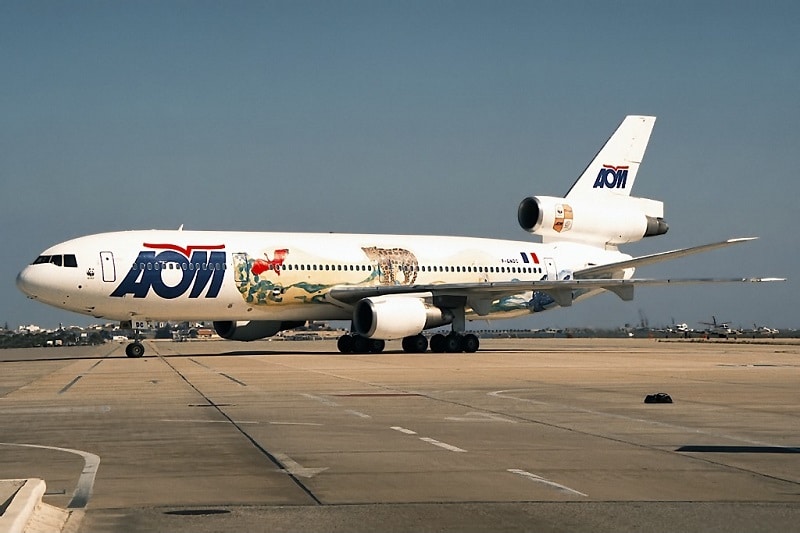
The DC‑10‑10 was the initial variant, designed for domestic U.S. operations. It was soon followed by
the DC‑10‑15, a “hot and high” version equipped with more powerful engines to improve performance at
airfields with high temperatures or elevations. Attention then shifted to the international market,
where the DC‑10 was well positioned as a mid‑sized widebody capable of serving long‑haul routes that
did not require the capacity of the Boeing 747.
At the time, twin‑engine aircraft were still restricted on extended overwater flights due to ETOPS
limitations, making tri‑jets like the DC‑10 and Lockheed L‑1011 TriStar attractive options for
airlines. Although Airbus was developing the A300 as a twin‑engine alternative, the U.S. market
remained firmly committed to three‑engined aircraft for long‑range operations.
McDonnell Douglas proposed an improved long‑range version, initially designated the DC‑10‑20. At the
request of Northwest Orient Airlines, the type was renamed the DC‑10‑40 to reflect its substantial
performance improvements. Only Northwest Orient and Japan Airlines ordered this variant.
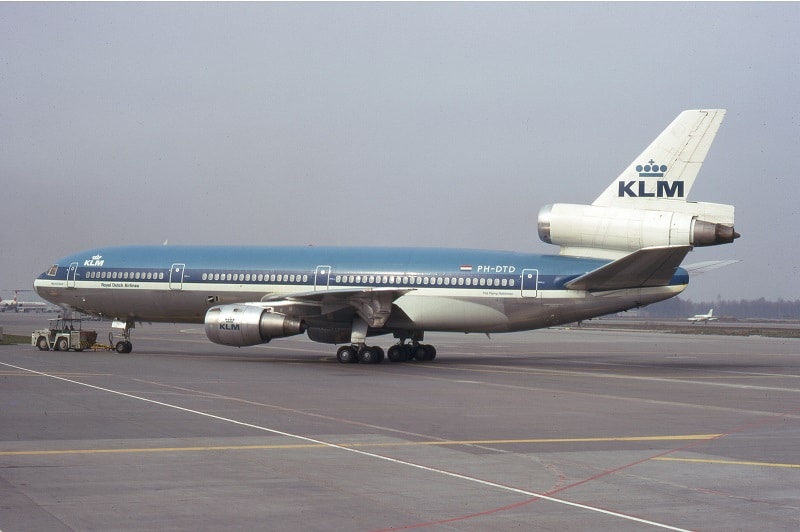
The most successful model was the DC‑10‑30, with 163 aircraft produced between 1972 and 1988. KLM
and Swissair were the launch customers, receiving their first aircraft on 21 November 1972. Swissair
operated the first commercial DC‑10‑30 service on 15 December 1972. The DC‑10‑30 featured a larger
wingspan and increased fuel capacity, and its higher operating weight required the addition of a
two‑wheel centre bogie to support the fuselage during ground operations.
Despite its commercial appeal, the DC‑10 faced significant challenges early in its career. The
aircraft’s outward‑opening cargo door design became a critical safety concern. Unlike inward‑opening
doors that rely on cabin pressure to remain sealed, the DC‑10’s design depended entirely on its
locking mechanism. Improperly latched doors could appear locked to both ground crew and cockpit
indicators, creating a dangerous situation.
On 12 June 1972, American Airlines Flight 96 suffered an explosive decompression when its cargo door
failed shortly after departure from Detroit. The resulting pressure differential caused part of the
cabin floor to collapse, severing control cables for the rudder and horizontal stabiliser. Despite
severely limited control, the crew managed to land the aircraft safely.
The NTSB recommended several modifications, including improved locking mechanisms and pressure‑equalisation
vents between the cargo hold and passenger cabin. Although McDonnell Douglas made changes, they were
not fully implemented across the fleet.
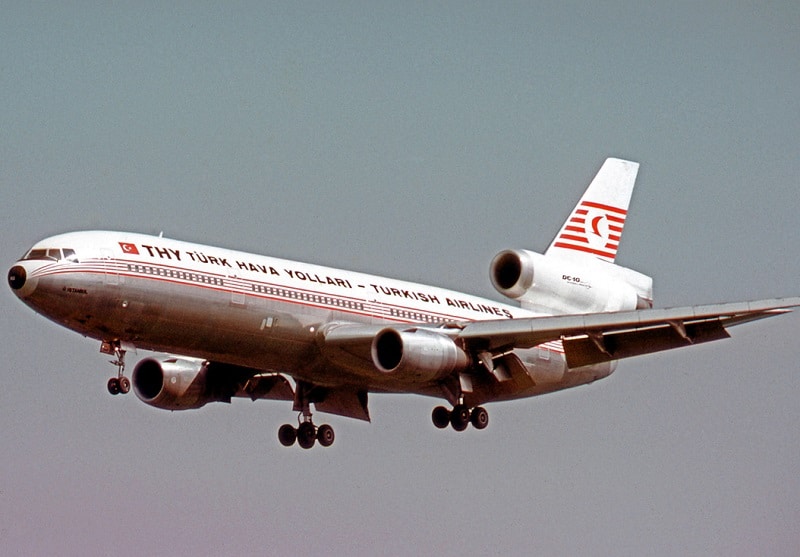
On 3 March 1974, Turkish Airlines Flight 981 suffered the same failure shortly after departing Paris.
This time, the consequences were catastrophic. The vents installed after the first accident proved
too small to prevent floor collapse, and all 346 people on board were lost. Following extensive
investigation, the FAA mandated comprehensive redesigns of the cargo door system, resolving the
issue permanently.
Further difficulties emerged on 25 May 1979 when American Airlines Flight 191 crashed shortly after
take‑off from Chicago O’Hare. The left engine separated from the wing due to improper maintenance
procedures that involved removing the engine and pylon as a single assembly using a forklift. The
detachment severed hydraulic lines, causing the leading‑edge slats to retract and the aircraft to
stall. All 271 occupants perished, marking the deadliest aviation accident in U.S. history.
The FAA temporarily rescinded DC‑10‑10 certification on 6 June 1979. McDonnell Douglas implemented
slat‑locking and hydraulic‑system modifications, and certification was reinstated on 13 July 1979.
American Airlines and Continental Airlines were heavily fined for using non‑standard maintenance
procedures that contributed to the accident.
Despite its troubled start, the DC‑10 went on to build a strong safety record as more hours were
accumulated across global fleets. The aircraft became popular with passengers for its spacious cabin
and two‑abreast window seating, and it found long‑term success in cargo operations and military
service. The final DC‑10 was completed in December 1988 and delivered to Nigerian Airways in July
1989, with total production reaching 446 aircraft.
Specifications.
| DC‑10 Specs | DC‑10‑10 | DC‑10‑30 | DC‑10‑40 | |
|---|---|---|---|---|
| Flight Crew | 3 | |||
| Range | 6,500 km / 3,500 nm | 9,600 km / 5,200 nm | 9,400 km / 5,100 nm | |
| Standard Seating | 270 — 222 Economy / 48 Business | |||
| Fuselage Length | 55.55 m / 182 ft 3.1 in | 55.35 m / 181 ft 7.2 in | 55.54 m / 182 ft 2.6 in | |
| Max Width | Cabin (internal) 5.69 m / 18 ft 8 in — Fuselage (external) 6.02 m / 19 ft 9 in | |||
| Wing Area | 330 m² / 3,550 ft² | 338.8 m² / 3,647 ft² | ||
| Wing Span | 47.35 m / 155 ft 4 in | 50.39 m / 165 ft 4 in | ||
| Tail Height | 17.53 m / 57 ft 6 in | 17.55 m / 57 ft 7 in | ||
| Freight / Cargo Volume | 26 × LD3 | |||
| Cruise Speed |
Typical Mach 0.82 (473 kn / 876 km/h) MMo Mach 0.88 (507 kn / 940 km/h) |
|||
| Max Payload | 43,014 kg / 94,829 lb | 46,180 kg / 101,809 lb | 44,356 kg / 97,787 lb | |
| Max Take‑off Weight | 195,045 kg / 430,000 lb | 251,744 kg / 555,000 lb | ||
| Operating Empty Weight (OEW) | 108,940 kg / 240,171 lb | 120,742 kg / 266,191 lb | 122,567 kg / 270,213 lb | |
| Fuel Capacity | 82,376 L / 21,762 US gal | 137,509 L / 36,652 US gal | ||
| Ceiling | 12,800 m (42,000 ft) | |||
| Engines × 3 | GE CF6‑6D | GE CF6‑50C | PW JT9D‑59A | |
| Engine Thrust | 177.92 kN (40,000 lbf) | 226.85 kN (51,000 lbf) | 235.74 kN (53,000 lbf) | |
| Take‑off Distance | 2,700 m / 9,000 ft | 3,200 m / 10,500 ft | 2,900 m / 9,500 ft | |
Assembly.
The McDonnell Douglas DC‑10 was assembled at the company’s Long Beach facility in California, a
production site already experienced in building large commercial aircraft. The assembly process
was structured around the DC‑10’s modular design, allowing the fuselage, wings, tail section and
engine pylons to be manufactured as separate units before being brought together on the final
assembly line.
The DC‑10’s three‑engine configuration required precise integration of the underwing pylons and
the straight‑through tail‑mounted nacelle. The tail engine sat at the base of the vertical
stabiliser, with the fin attached above it. This arrangement simplified airflow compared with
the S‑duct used on the Lockheed L‑1011 TriStar, but demanded careful alignment during assembly
to ensure structural integrity and aerodynamic performance.
The DC‑10‑30 and DC‑10‑40 variants introduced additional assembly considerations. Their larger
wingspans required reinforced wing structures and increased fuel capacity, while the DC‑10‑30’s
higher operating weight necessitated the installation of a two‑wheel centre bogie beneath the
fuselage. This centre gear was fitted during the mid‑stage assembly process and aligned with the
main underwing landing gear to distribute weight more effectively on the ground.
Throughout production, McDonnell Douglas incorporated incremental improvements based on airline
feedback and regulatory requirements. After early cargo‑door incidents, the assembly process was
updated to include redesigned locking mechanisms and structural reinforcements. Later, following
the grounding of the DC‑10‑10 in 1979, modifications to the slat‑locking system and hydraulic
routing were integrated directly into the assembly line and retrofitted to existing aircraft.
The DC‑10’s assembly programme ran from 1970 until 1988, with the final aircraft delivered in
July 1989. In total, 446 DC‑10s were produced, surpassing the original break‑even estimate of
438 airframes. The Long Beach line ultimately transitioned to the MD‑10 and MD‑11, continuing
McDonnell Douglas’s widebody production legacy until the Boeing merger in 1997.
Orders & Deliveries.
The DC‑10 secured strong early interest from major U.S. carriers. American Airlines placed the
launch order in February 1968 for 25 aircraft, followed shortly afterwards by United Airlines
with an order for 30 airframes and options for 30 more. The initial DC‑10‑10 variant was designed
for domestic operations, offering a range of 6,100 kilometres (3,800 miles).
The DC‑10‑30 became the most successful variant, with 163 aircraft produced between 1972 and 1988.
KLM and Swissair were the launch customers, receiving their first aircraft on 21 November 1972.
Swissair operated the first commercial DC‑10‑30 service on 15 December 1972.
Over time, the DC‑10 was ordered by airlines across North America, Europe, Asia, Africa, and the
Middle East. The type also found long‑term success as a cargo aircraft and as a mid‑air refuelling
platform for the U.S. Air Force. Production concluded in December 1988, and the final DC‑10 was
delivered to Nigerian Airways in July 1989.
| DC10 | Orders | Deliveries |
|---|---|---|
| Aeromexico | 6 | 4 |
| Air Afrique | 4 | 3 |
| Air Atlantis | 2 | 0 |
| Air New Zealand | 8 | 8 |
| Air Serbia | 2 | 2 |
| Air Siam | 1 | 1 |
| Alitalia | 14 | 8 |
| American Airlines | 35 | 35 |
| Ariana Afghan Airlines | 1 | 1 |
| ATAircraft One | 5 | 4 |
| Balair/CTA | 2 | 1 |
| Biman Bangladesh Airlines | 1 | 1 |
| British Caledonian Airways | 8 | 8 |
| China Airlines | 2 | 0 |
| Condor Flugdienst | 3 | 3 |
| CP Air | 7 | 7 |
| EgyptAir | 4 | 0 |
| FedEx Express | 11 | 11 |
| Finnair | 3 | 3 |
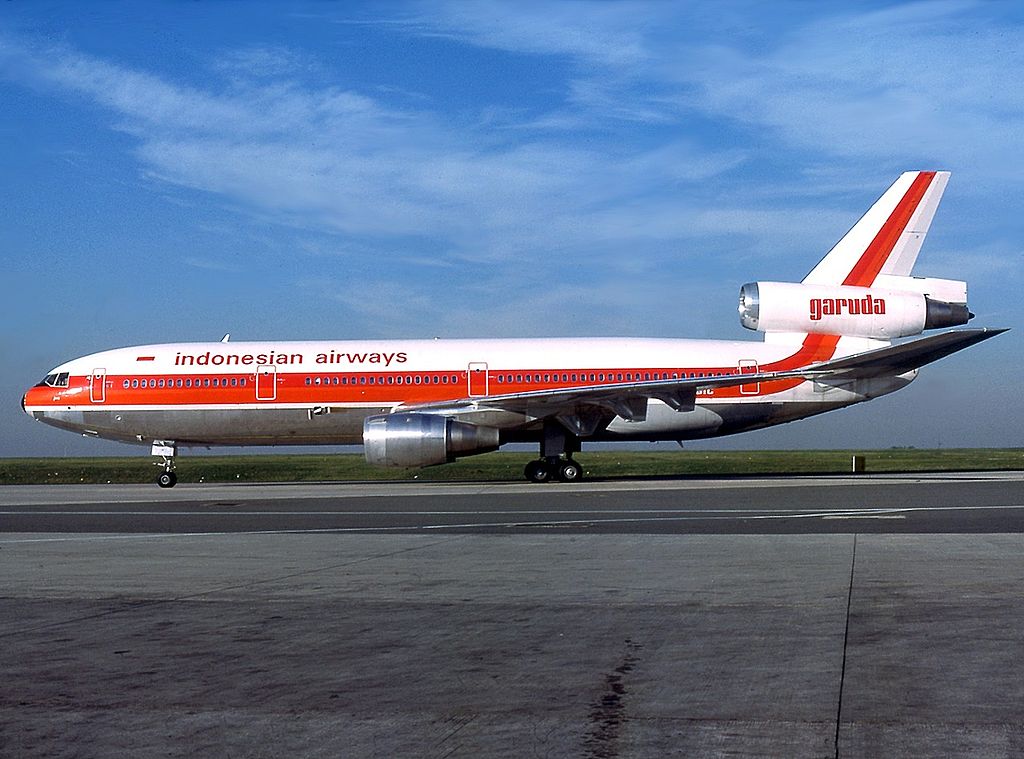
| Garuda Indonesia | 6 | 6 |
| Ghana Airways | 2 | 1 |
| Iberia Airlines | 9 | 9 |
| Japan Airlines | 20 | 20 |
| Japan Airlines Co., Ltd. | 2 | 2 |
| KLM Royal Dutch Airlines | 11 | 11 |
| Korean Air | 5 | 3 |
| DC10(Contd.) | Orders | Deliveries |
| Laker Airways (Bahamas) | 11 | 11 |
| Lignes Aeriennes de Congolaise | 2 | 2 |
| Lufthansa | 11 | 11 |
| Malaysia Airlines | 3 | 3 |
| Martinair Cargo | 4 | 4 |
| Mexicana | 7 | 5 |
| National Airlines | 19 | 16 |
| Nigeria Airways | 3 | 3 |
| Northwest-Merged w Delta | 22 | 22 |
| Pakistan International Airline | 4 | 4 |
| Philippine Airlines | 2 | 2 |
| SABENA Aerospace | 5 | 5 |
| Scandinavian Airlines | 5 | 5 |
| Seaboard World Airlines | 1 | 1 |
| Singapore Airlines | 7 | 7 |
| Swissair | 13 | 13 |
| Thai Airways International | 5 | 5 |
| Transamerica Airlines | 3 | 3 |
| Turkish Airlines | 3 | 3 |
| U.S. Air Force | 60 | 60 |
| United Airlines | 73 | 65 |
| UTA | 8 | 6 |
| Varig Airlines | 10 | 10 |
| VIASA | 4 | 3 |
| Wardair | 2 | 2 |
| Western Airlines | 15 | 13 |
| World Airways, Inc. | 9 | 9 |
| Zambia Airways | 2 | 1 |
| Grand Total | 487 | 446 |
Legacy.
The McDonnell Douglas DC‑10 leaves behind a complex but ultimately respected legacy in commercial
aviation. Although its early years were overshadowed by high‑profile accidents and design‑related
controversies, the aircraft matured into a dependable widebody that served airlines, cargo carriers
and military operators for decades.
Passengers often praised the DC‑10 for its spacious cabin, high ceilings and comfortable two‑abreast
window seating. For many travellers in the 1970s and 1980s, the DC‑10 offered a modern widebody
experience without the scale of the Boeing 747, making it well suited to long‑range routes that did
not require the largest aircraft available.
Pilots appreciated the DC‑10’s handling characteristics and robust systems. As operational hours
accumulated, the type built a strong safety record, demonstrating the reliability of its airframe
and engines once early issues were resolved. The aircraft’s three‑engine configuration also made it
a practical choice during the pre‑ETOPS era, when twin‑engine jets faced strict overwater
restrictions.
The DC‑10 found enduring success in cargo operations. FedEx Express became the largest operator,
and many passenger aircraft were later converted to freighters. The U.S. Air Force also adopted the
type as a mid‑air refuelling platform, further extending its operational life.
Production ended in 1988, with the final delivery in 1989. The DC‑10 was succeeded by the MD‑10 and
MD‑11, both of which incorporated aerodynamic and avionics improvements. After Boeing’s merger with
McDonnell Douglas in 1997, the MD‑11 received a glass cockpit upgrade that removed the need for a
flight engineer, continuing the lineage of the DC‑10 into the 21st century.
The last passenger DC‑10 flight took place in February 2014, marking the end of an era. Yet the
aircraft remains fondly remembered by crews and enthusiasts alike. Despite its turbulent beginning,
the DC‑10 ultimately proved to be a capable, versatile and influential widebody that helped shape
long‑range aviation during a transformative period in airline history.
 |
 La Guardia (LGA), 4 October 1973. |