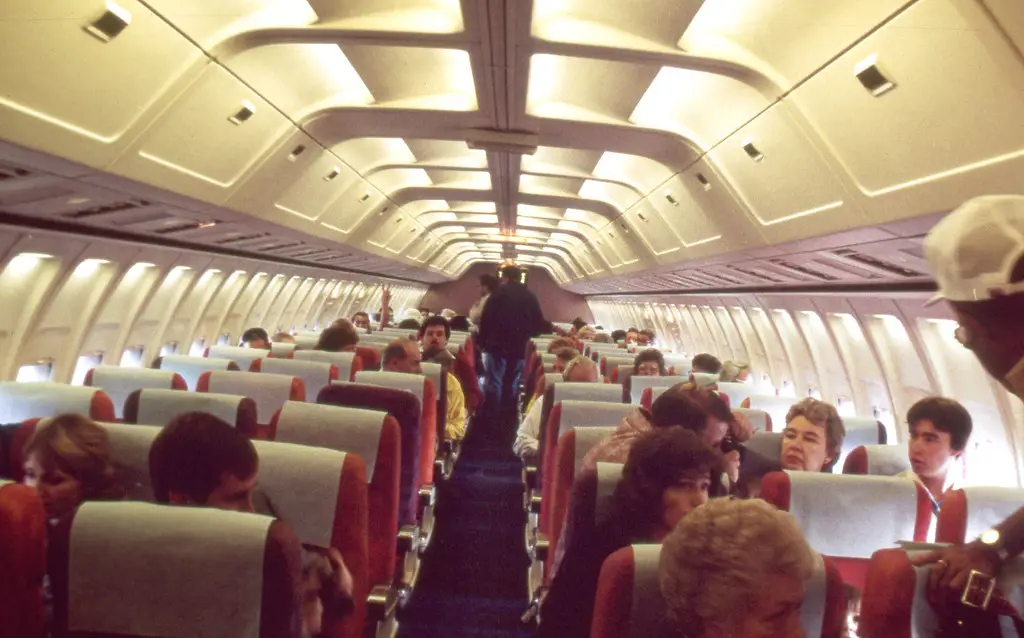
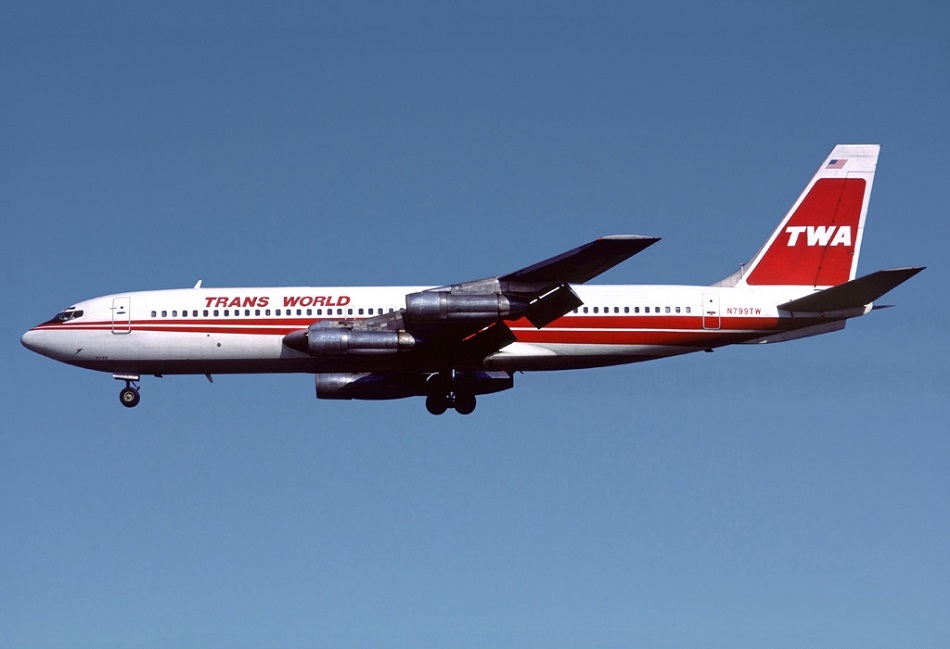
When we think of passenger aviation history, our minds often jump straight to the Boeing 747, the Queen of the Skies, which changed global travel forever. But the predecessor to the 747 — the Boeing 707 — was every bit as exciting and just as influential in shaping how we travel today.

Boeing 707 — At a Glance
| First Flight | 20 December 1957 |
| Entered Service | 26 October 1958 (Pan Am) |
| Manufacturer | Boeing Commercial Airplanes |
| Engines | 4 × Pratt & Whitney JT3C / JT3D |
| Passengers | 137–189 (typical) |
| Range | 5,400–9,300 km (variant dependent) |
| Cruise Speed | Mach 0.80–0.82 |
| Number Built | 1,010 (plus military variants) |
| Notable Operators | Pan Am, TWA, Qantas, BOAC, American Airlines |
| Fun Fact | The 707 introduced the six‑abreast cabin still used in today’s Boeing 737. |
Boeing 707 — Development Timeline
- 1949–1950: Boeing begins early jet transport studies.
- 1952: Dash 80 design work begins.
- 15 July 1954: Dash 80 (367‑80) makes its first flight.
- 1955: Pan Am orders 20 Boeing 707s and 25 DC‑8s.
- 20 Dec 1957: First flight of the Boeing 707‑120.
- 18 Sep 1958: FAA certification granted.
- 26 Oct 1958: First commercial service — Idlewild → Gander → Paris.
- 1959: Qantas becomes first international operator.
- 1960–1965: Introduction of 138, 220, 320, 420, 320B, 320C variants.
- 1978: Passenger 707 production ends.
- 1991: Final 707 airframe produced (military E‑6).
- 2013: Saha Airlines ends last scheduled passenger 707 service.
- 2019–2026: Small number remain in military roles (AWACS, refuelling).
The Propeller Era and Boeing’s Position
If we go back to the late 1940s and early 1950s, passenger airliners were still propeller-driven — slow, small, and unable to fly above the weather as we do today. Douglas dominated the passenger market with aircraft such as the DC‑3, DC‑4, DC‑6 and DC‑7, while Boeing was known primarily for its military aircraft: the B‑17 Flying Fortress, B‑29 Superfortress, B‑47 Stratojet and the mighty B‑52 Stratofortress.
Boeing’s only passenger aircraft at the time were the Boeing 314 Clipper flying boat, the Boeing 377 Stratocruiser and the Boeing 307 Stratoliner. The British were first into the jet age with the de Havilland Comet, which flew on 27 July 1949. Although the Comet suffered from design faults, it provided valuable lessons that would influence future jet airliner designs.
The Dash 80 — Boeing’s Jet Gamble
During 1949/1950, Boeing began exploring designs for a jet aircraft that could serve both civilian airlines and the military. Jet bombers needed a refuelling aircraft that could keep pace, and Boeing saw an opportunity to create a dual‑market solution.
The result was the Boeing 367‑80, known as the Dash 80. Rolled out on 14 May 1954 and first flown on 15 July 1954, it was a proof‑of‑concept aircraft. The US military quickly adopted the design as the basis for the KC‑135 Stratotanker. Only one Dash 80 was built, and today it resides at the National Air and Space Museum’s Steven F. Udvar‑Hazy Center in Washington, DC.
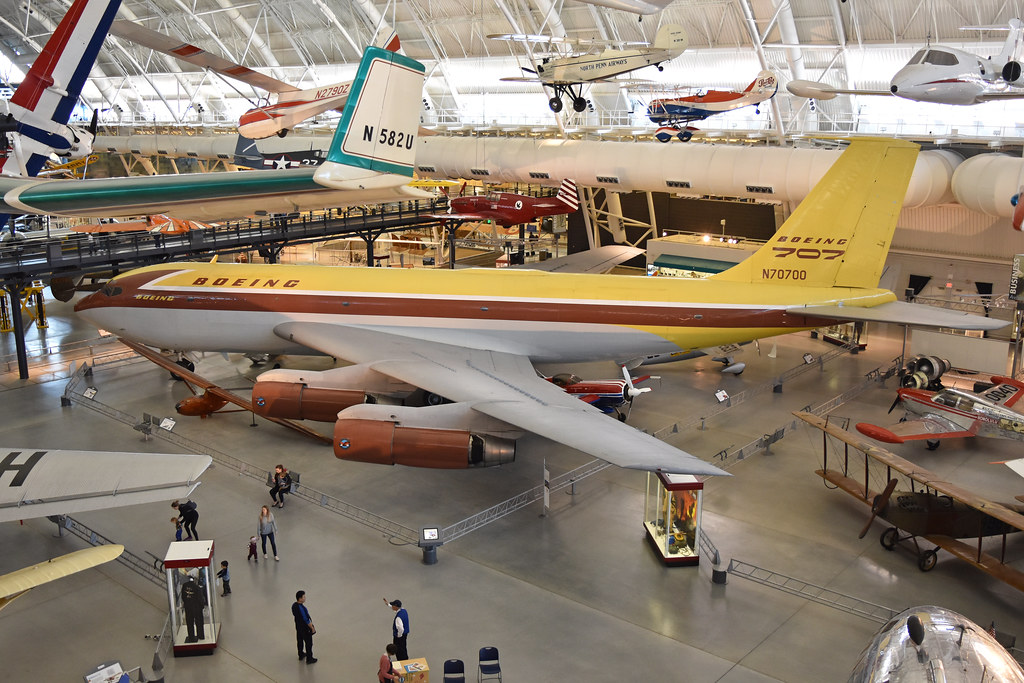
The Dash 80 originally featured a four‑abreast cabin in a 3.35‑metre fuselage. Airlines wanted more space, so Boeing widened it to five‑abreast, then finally to six‑abreast at 3.76 metres (12 ft 4 in). This final width became the standard for the Boeing 707.
Wing Design and Lessons from the Comet
Experience from the Dash 80 and lessons learned from the de Havilland Comet influenced the final design of the Boeing 707. One key improvement was the addition of Krueger flaps on the leading edge between the inboard and outboard engines. The Comet had suffered runway overruns when the wing stalled during over‑rotation on takeoff. The Krueger flaps ensured this would not happen on the 707, even if the tail was dragged along the runway.
Boeing 707 Variant Specs
Boeing 707 Variants Overview
| Specification | 707‑120B | 707‑320 / ‑420 | 707‑320B | 707‑320C |
|---|---|---|---|---|
| Crew | 3 — Pilot, Copilot, Flight Engineer | |||
| First Flight | 20 Dec 1957 | 11 Jan 1958 | 11 Jan 1959 | – |
| Number Produced | 300 | 106 | 174 | 337 |
| Passengers (1 Class) | 174 | 189 | 189 | 195 |
| Passengers (2 Class) | 137 | 141 | 141 | 141 |
| Fuselage Width | 3.759 m (12 ft 4 in) | |||
| Aircraft Length | 44.22 m (145 ft 1 in) | 46.61 m (152 ft 11 in) | ||
| Tail Height | 12.70 m | 12.85 m | 12.83 m | 12.80 m |
| Main Wing Span | 39.88 m | 43.41 m | 44.42 m | |
| Main Wing Area | 226.3 m² | 283 m² | ||
| Operating Empty Weight | 57,600 kg | 64,600 kg | 67,500 kg | 67,300 kg |
| MTOW | 117,000 kg | 141,700 kg | 151,500 kg | |
| Takeoff Distance | 2,300 m | 3,250 m | 3,000 m | |
| Landing Distance | 2,000 m | 2,200 m | 1,800 m | 1,900 m |
| Fuel Capacity | 65,601 L | 90,169 L | 90,301 L | |
| Engines (x4) | Pratt & Whitney JT3D‑3 |
JT4A‑11/12 Rolls‑Royce Conway‑12 |
Pratt & Whitney JT3D | |
| Engine Thrust (x4) | 80 kN | 78 kN | 85 kN | |
| Max Cruise Speed | 484–540 kn / 897–1000 kph | 478–525 kn / 885–974 kph | ||
| Service Ceiling | 42,000 ft (12,800 m) | |||
| Range | 9,300 km / 5,000 nm | 5,400 km / 2,900 nm | 9,300 km / 5,000 nm | 5,400 km / 2,900 nm |
The first standard model of the Boeing 707 was the 707‑120, powered by Pratt & Whitney JT3C turbojet engines. It first flew on 20 December 1957, with FAA certification following on 18 September 1958.
As with any airliner, the first variant is rarely the only one, nor is it necessarily the most popular. The 120 series sold successfully, but the later 320 series would become the most popular seller.
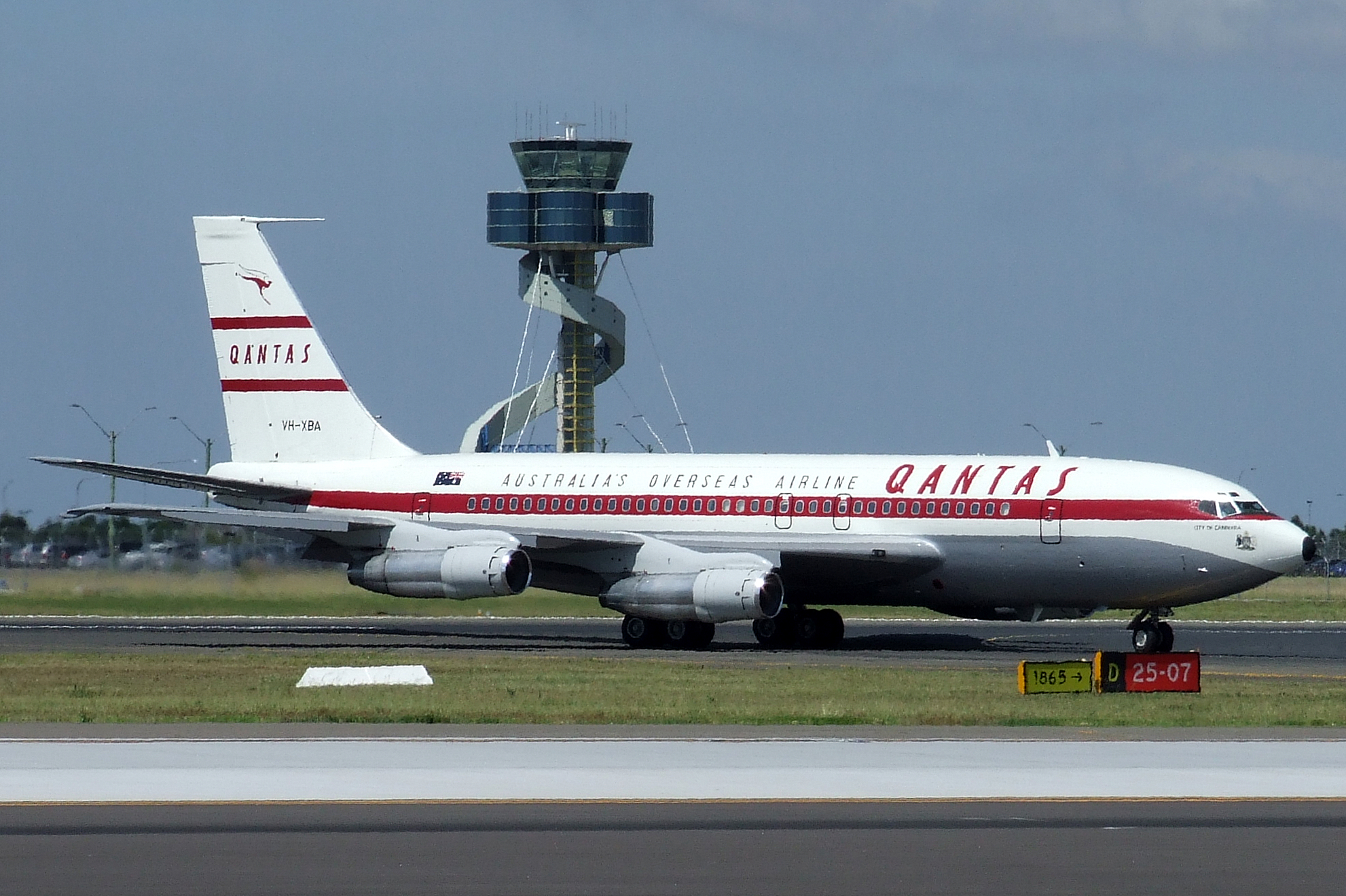
707‑138 — The Qantas Long‑Range Special
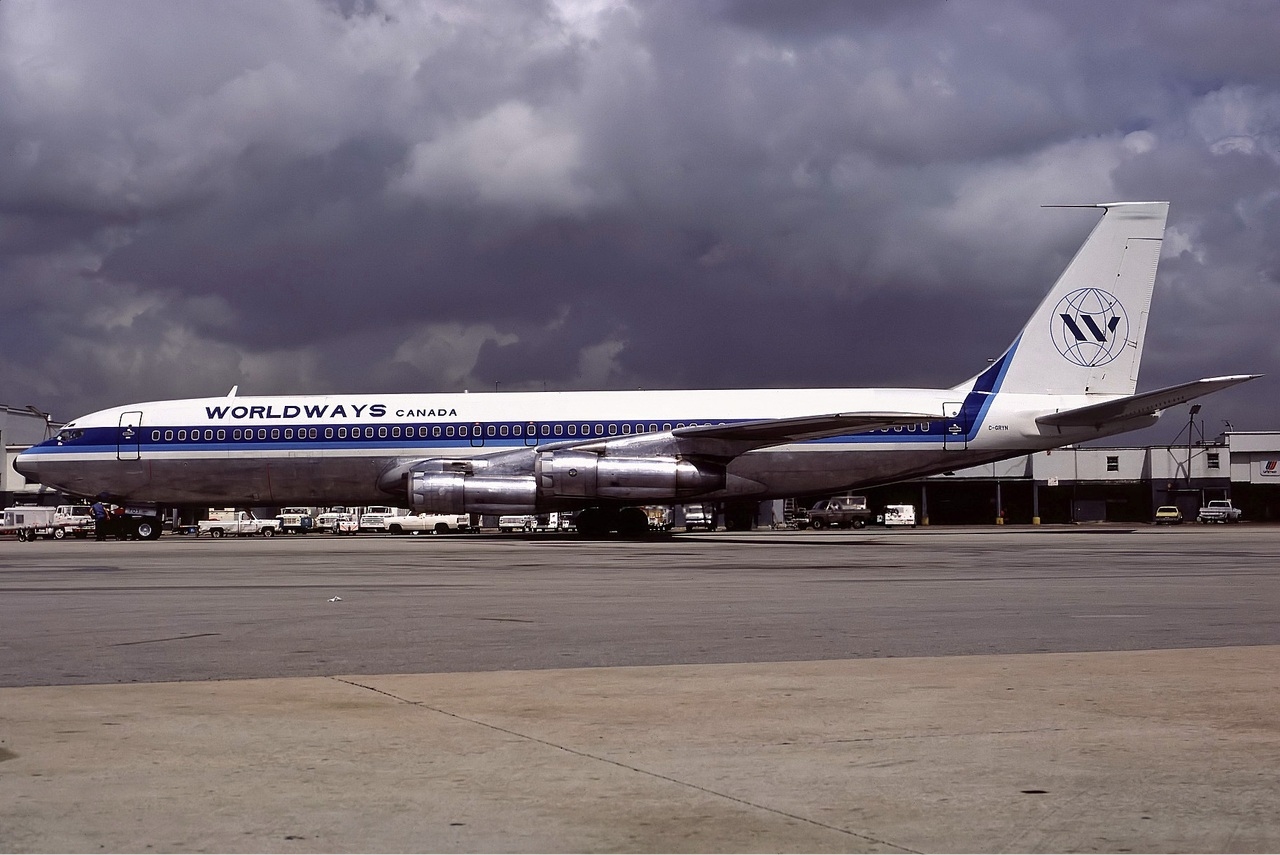
Even within a series, modifications were made at the request of customers. QANTAS ordered a shortened version of the 707‑120, reduced by 3.04 metres (10 ft). Designated the 707‑138, it was essentially a lighter version of the 707‑120 with the same maximum takeoff weight (MTOW). This allowed QANTAS to carry more fuel for longer sectors — essential for Australia’s remote location.
707‑220 — The Braniff Hot‑Rod
Braniff International Airways ordered a higher‑powered 707‑220 using Pratt & Whitney JT4A engines. Only five were produced, making it one of the rarest 707 variants.
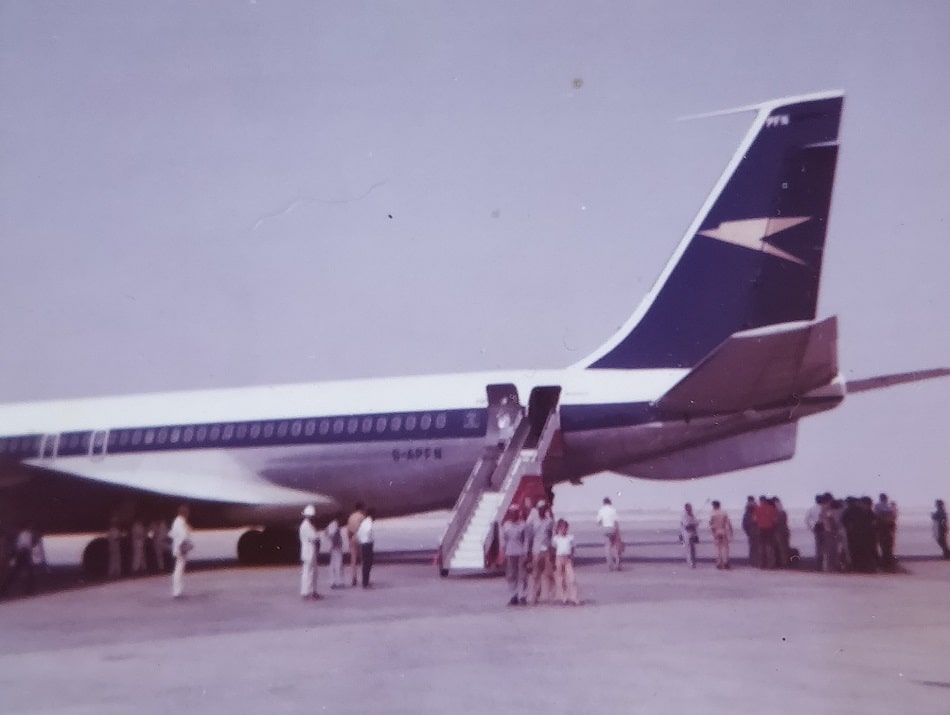
707‑320 and 707‑420 — The Intercontinental Models
The most popular 707 variant was the 707‑320. It featured an extended wingspan and more powerful JT4A engines. Another model, the 707‑420, was essentially a 320 fitted with Rolls‑Royce Conway engines.
British certification required the aircraft to execute a go‑around with one engine out. To achieve this, Boeing increased the height of the tail fin and added a ventral fin below the tail. These modifications also helped control Dutch Roll — a characteristic of swept‑wing aircraft.
707‑320B — The JT3D Turbofan Upgrade
The initial engines on the Boeing 707 were turbojets — the Pratt & Whitney JT3C. However, the JT3D turbofan variant became the most popular engine. It was more powerful and more fuel‑efficient. Many original JT3C‑powered 707s were converted to JT3D engines, gaining a “B” suffix (e.g., 707‑120B).
The 707‑320 only came out with the JT3D engine option. This variant had a stronger structure and other modifications to make it truly intercontinental, relying on the newer engine for its performance.
707‑320C — The Convertible Cargo/Passenger Model
The final major variant of the Boeing 707 was the 707‑320C. The “C” stood for convertible, meaning the aircraft could alternate between passenger and cargo roles. It featured a large fuselage cargo door, three leading‑edge sectional flaps and improved landing and takeoff performance. The ventral tail fin was removed.
These wing improvements were incorporated into 707‑320B aircraft from 1963 onwards. These upgraded aircraft were known as the 707 Advanced.
707‑700 — The CFM56 Testbed
Boeing began a test program for a 707‑700 using CFM International CFM56 engines. The program was abandoned as Boeing felt the model would detract from the 767 and 757 programs.
Dutch Roll, Yaw Dampers and the Braniff Training Accident
The Dutch Roll is a behaviour involving simultaneous yawing and rolling of an aircraft. Yawing occurs when the nose and tail swing from side to side. Rolling is when the wings dip up and down. Combine these two behaviours and you have a very uncomfortable ride — and potentially a dangerous one.
On a training flight for a brand‑new aircraft destined for Braniff International Airways, pilots were demonstrating the effects of Dutch Roll by turning off the yaw dampers. A less‑than‑gentle input by one of the pilots resulted in three of the engines being ripped off the aircraft. It crash‑landed, killing four of the eight occupants.
The Cockpit of the Boeing 707
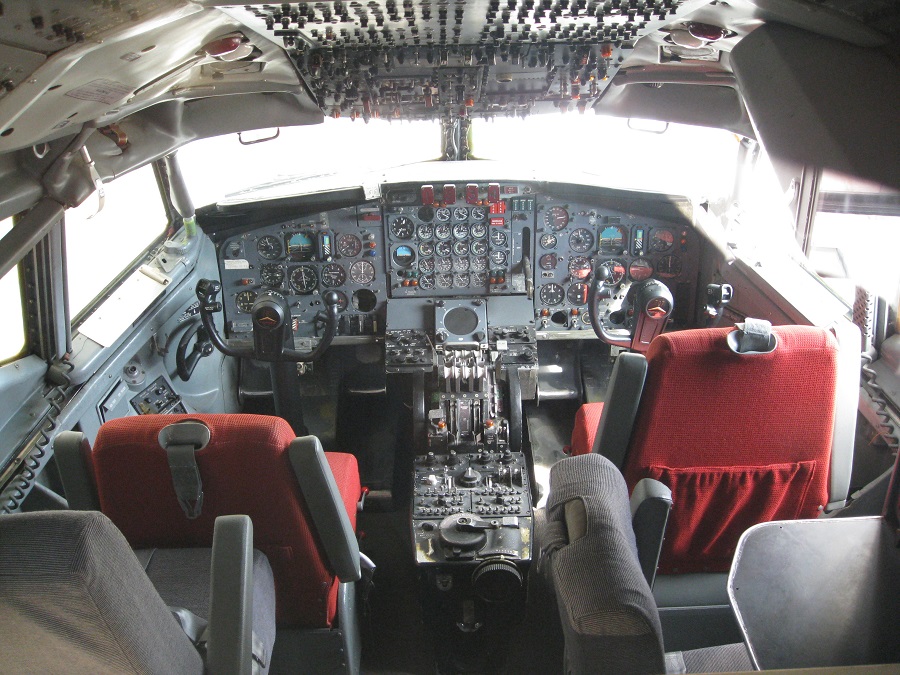
The computer‑driven glass cockpits of today were still years away when the Boeing 707 came on the scene. The pilot and copilot sat up front with traditional control yokes. To the bottom right was the flight engineer’s seat and station, where all systems were monitored. His seat could rotate forward to assist the pilot‑in‑command with engine controls during takeoff and landing. The seat on the bottom left was the jump seat, often occupied by a spare pilot on long flights.
First Commercial Service of the Boeing 707
The first commercial service of the Boeing 707 took place on 26 October 1958. The flight departed New York’s Idlewild Airport (now JFK), stopped at Gander, Newfoundland for refuelling, and continued to Paris Le Bourget Airport. Air travel had now changed forever.
Boeing had opted to press ahead with the 707 using the lower‑powered JT3C engines. As we have seen, they later upgraded these to the JT3D. Douglas, on the other hand, waited for newer engines to become available, avoiding retrofits. This may have been prudent from a rework perspective, but it cost them market share — their DC‑8 arrived later, and airlines such as United, Delta and Eastern had to wait for their DC‑8s, losing valuable time in the new jet age.
Launch Customers and Pan Am’s Role
Key Operators of the Boeing 707
| Pan American World Airways | Launch customer; first to operate intercontinental jet service. |
| Trans World Airlines (TWA) | Major US operator; last US scheduled 707 service (1983). |
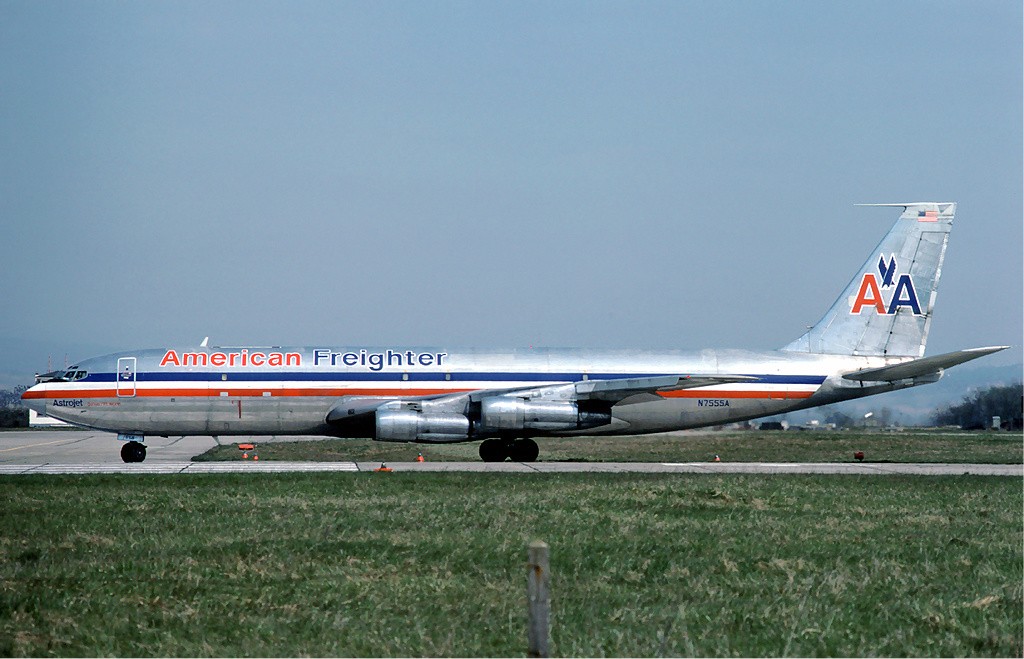
| American Airlines | First domestic US operator of the 707. |
| Qantas | First international airline to receive the 707; operated unique 707‑138. |
| BOAC | Operated the Conway‑powered 707‑420; required tail/ventral fin changes. |
| Continental Airlines | Early domestic operator; extensive US network use. |
| Saha Airlines (Iran) | Last airline to operate scheduled passenger 707 flights (ended 2013). |
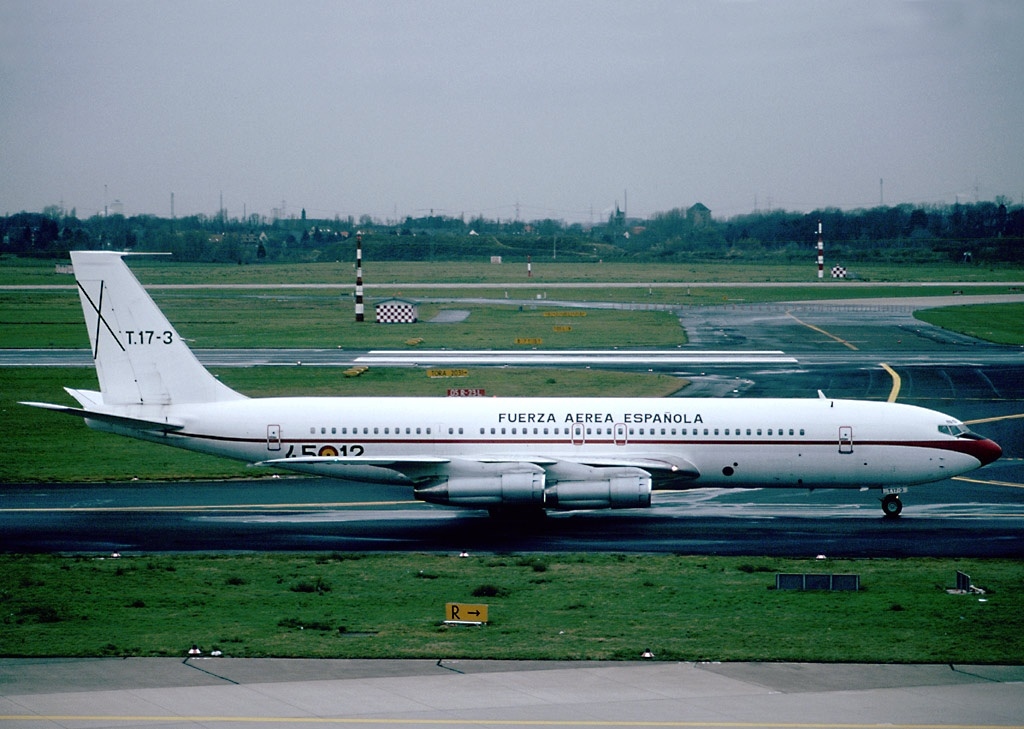
| Military Operators | USAF (E‑3 AWACS, E‑6), Spanish Air Force, others — still flying today. |
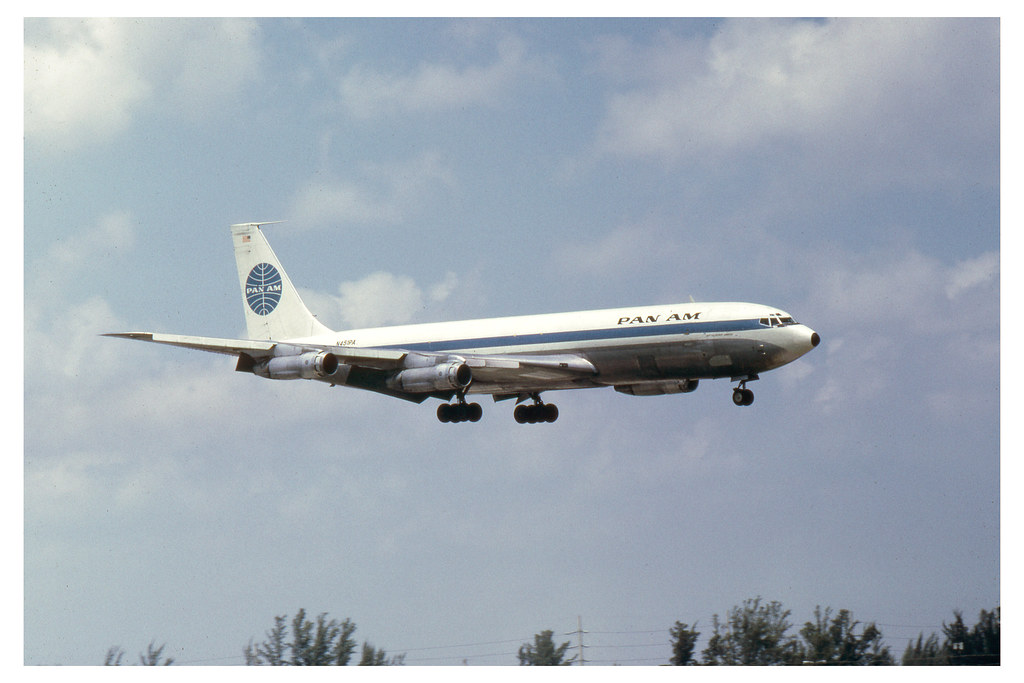
So who was the launch customer for the Boeing 707? Back in those days, Juan Trippe and the team at Pan American World Airways (Pan Am) were true visionaries. As with the Boeing 747 in later years, Pan Am recognised the market potential of jet airliners and backed themselves by ordering twenty Boeing 707s and twenty‑five Douglas DC‑8s.
This allowed Pan Am to boast for a year that they were the only operator of American intercontinental jet transports. Pan Am’s first orders for the Boeing 707 were placed on 13 October 1955.
On 17 October 1958, Pan Am’s first 707 was christened at National Airport, Washington, DC. The event was attended by President and First Lady Eisenhower, Pan Am founder Juan Trippe and other VIPs. First Lady Eisenhower christened the aircraft, registration N710PA, as Jet Clipper America. Guests then joined an inaugural service from Baltimore’s Friendship International Airport to Paris.
Domestic Operators and the Spread of Jet Travel
American Airlines was the first to fly domestic services using their own 707s. They were soon followed by TWA (Trans World Airlines) and Continental Airlines. In 1959, QANTAS became the first international airline to receive its 707s.
The Boeing 707 quickly became the most popular airliner of its day. It forced changes in the way people travelled as a whole. Airport terminals had to be redesigned, runways lengthened, catering operations expanded, baggage handling modernised, reservations systems upgraded and air traffic control procedures rewritten. The jet age had arrived, and the world had to adapt.
Cultural Influence
The Boeing 707 represented the cutting edge of aviation technology and became a symbol of air travel in general. It appeared in popular culture, including the Steve Miller Band’s song Jet Airliner with the line “As I get on the 707…”.
Arthur Hailey’s original Airport novel — and the subsequent movie — also featured the 707 prominently, cementing its place in aviation history and popular imagination.
Decline of the Boeing 707
Air travel had never been so popular, and more people were flying than ever before. But this created a problem: the 707 could not be enlarged any further. More powerful engines would require more ground clearance, which would require new landing gear — and that meant a complete redesign.
In short, a whole new aircraft would be needed.
Engine technology was also moving on due to increasing fuel prices, highlighted dramatically during the 1973 oil crisis. Aircraft noise was becoming a hot topic, and tighter restrictions began to threaten the very existence of older jet engines.
By 1985, international noise regulations threatened the future of existing 707s. To extend their life, Shannon Engineering of Seattle created a hush‑kit package known as the Quiet 707.
End of Production and Final Operators
Production of passenger‑carrying Boeing 707s ended in 1978, with 1,010 aircraft having rolled out of the factory. The production line remained open until 1991 for military versions, including the E‑3 and E‑6.
In the United States, the last scheduled passenger service using the Boeing 707 was flown by TWA on 30 October 1983. Saha Airlines of Iran was the last airline to end 707 passenger services in April 2013.
By 2019, a small number of 707s were still flying in military roles such as aerial refuelling or AWACS (Airborne Warning and Control System).
John Travolta’s Boeing 707
One of the most famous Boeing 707s is the one owned by actor John Travolta, registration N707JT. Travolta’s aircraft was meticulously restored in QANTAS V‑Jet livery — a marketing name used by QANTAS to highlight the introduction of turbofan engines on their 707 fleet.
Travolta formally donated the aircraft to the Historical Aircraft Restoration Society (HARS) in Shellharbour, Australia. The donation is confirmed and remains active.
As of 2026, the aircraft is still located in the United States, stored at Brunswick, Georgia. The transfer to Australia has been delayed due to several major logistical challenges:
- Airworthiness restoration — The aircraft has been parked for years and requires extensive inspections, corrosion treatment, fuel system cleaning, hydraulic checks, avionics updates and JT3D engine serviceability work.
- Regulatory approvals — A ferry flight to Australia requires FAA and CASA permits, insurance coverage, a qualified 707 flight crew and an approved routing via Hawaii, Fiji and Brisbane.
- Funding — HARS has stated that the ferry operation will cost several hundred thousand dollars, and they are seeking sponsorship and donations.
Travolta remains supportive of the project and continues to liaise with HARS. The museum has confirmed that the aircraft will come to Australia, but the timeline depends entirely on restoration progress and regulatory approvals.
The aviation community believes that late 2026 or 2027 is the earliest realistic arrival date, though this may shift depending on restoration progress.
Importantly, there are no credible reports of cancellation. The project is still alive.
Legacy of the Boeing 707
Although the Boeing 707 was eventually superseded by the Boeing 747, its legacy lives on in modern air travel. The nose section, fuselage cross‑section and cockpit configuration carried forward to the Boeing 727, 757, and of course the still‑very‑popular 737.
If you sit in a 737 cabin today, look around and appreciate that this is the spacious six‑abreast cabin that 707 travellers first got excited about. The 707 set the standard for narrow‑body jet travel for decades to come.