
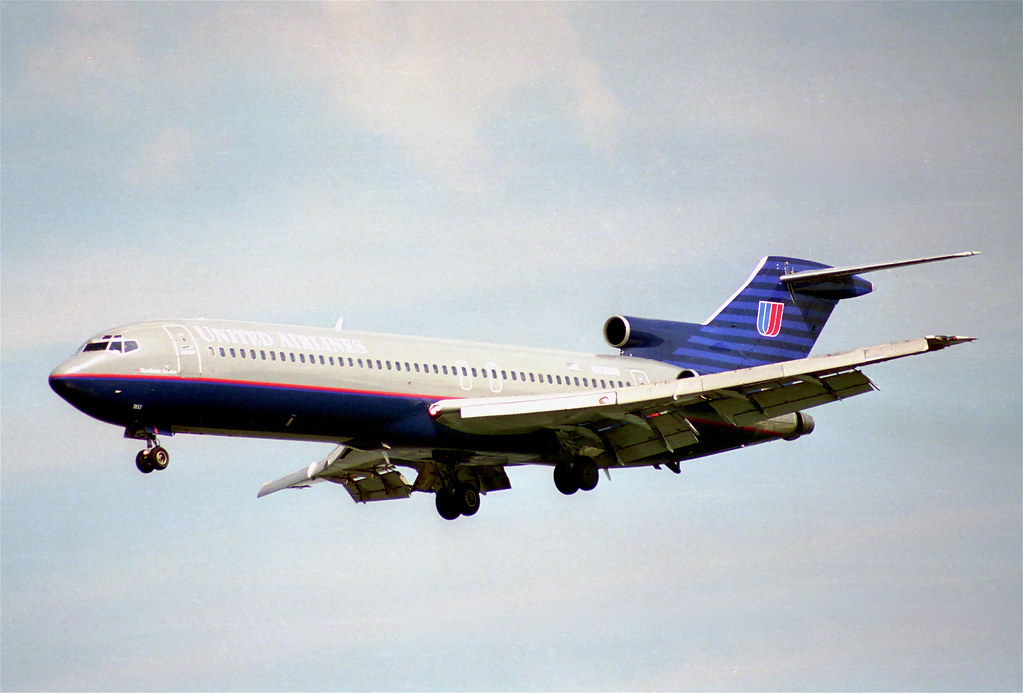
The Boeing 727 is a narrow‑body trijet airliner produced by Boeing Commercial Airplanes from 1963 to 1984.
Designed as a follow‑on to the Boeing 707, the 727 borrowed the cockpit and parts of the fuselage design
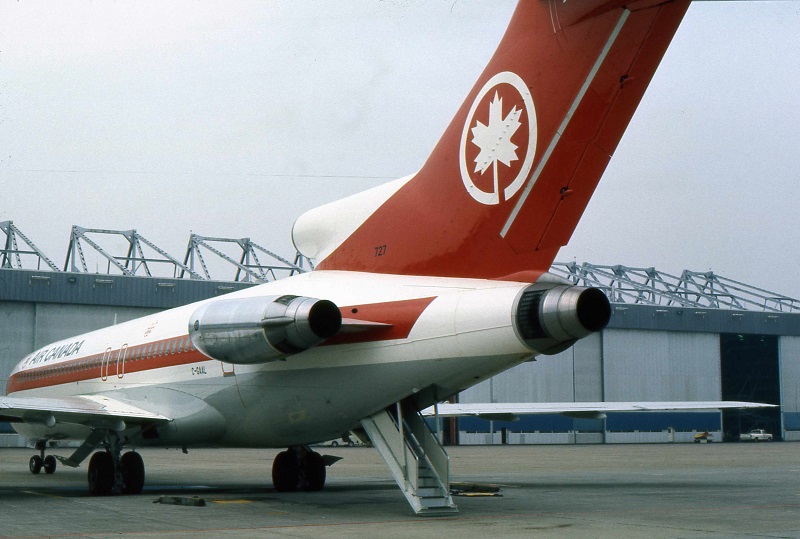
from its larger quad‑jet sibling. Its distinctive three‑engine layout — two mounted on the rear fuselage
and one in the tail fed by an S‑duct — gave the aircraft a sleek, uncluttered wing and excellent aerodynamic
performance.
The 727 was created to meet the needs of airlines requiring an aircraft capable of operating from short
runways, smaller city airports, and remote regional airfields. Its ability to fly from runways as short as
4,500 feet opened up direct routes that previously required passengers to connect through major hubs.
With powerful lift‑enhancing devices, triple‑slotted flaps, and leading‑edge slats, the 727 delivered
exceptional low‑speed stability and short‑field capability.
Self‑sufficiency was a hallmark of the 727. It was Boeing’s first airliner to feature an auxiliary power
unit (APU), allowing it to operate at airports without ground power. A built‑in rear air‑stair enabled
passenger boarding at remote locations — a feature later made famous by the D. B. Cooper hijacking, which
led to the introduction of the Cooper Vane to prevent in‑flight deployment.
Two main variants were produced: the 727‑100 and the stretched 727‑200, with the latter also offered in
the higher‑performance 727‑200 Advanced configuration. Additional specialised versions included the
727‑100C Convertible and the 727‑100QC Quick Change, which allowed rapid switching between passenger and
cargo operations.
Boeing 727 — At a Glance
| First Flight | 9 February 1963 |
| Entered Service | 1 February 1964 (Eastern Air Lines) |
| Manufacturer | Boeing Commercial Airplanes |
| Engines | 3 × Pratt & Whitney JT8D |
| Passengers | 120–180 (variant dependent) |
| Range | 1,700–2,600 nmi (3,100–4,800 km) |
| Cruise Speed | Mach 0.84 (Typical) |
| Number Built | 1,832 |
| Notable Operators | Eastern, United, American, Braniff, Northwest, Pan Am, Lufthansa, ANA, Air Canada |
| Fun Fact | The 727 was Boeing’s first aircraft with an APU and the only trijet Boeing ever produced. |
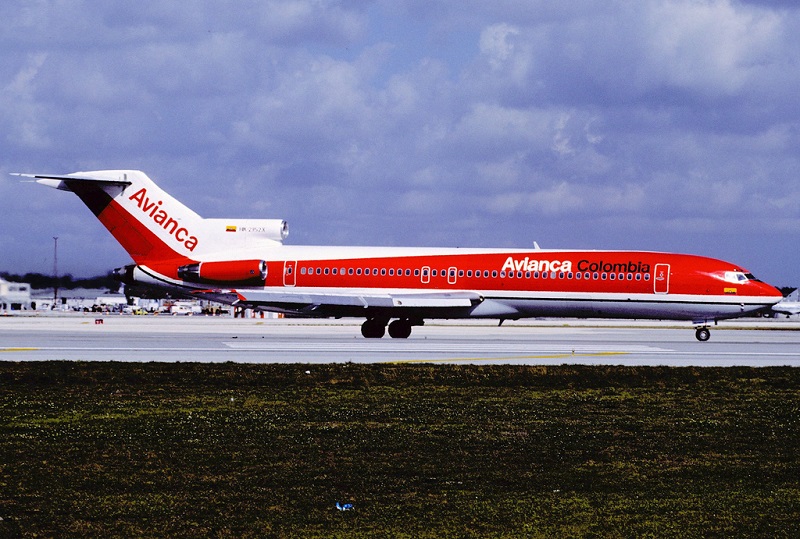
Boeing 727 — Development Timeline
- Early 1960s: United, Eastern, and American define requirements for a new short‑field jet.
- 1960–1961: Boeing studies collaboration with de Havilland (Trident) — ultimately abandoned.
- 1962: Final design chosen: three engines, 6‑abreast cabin, short‑runway capability.
- 9 February 1963: First flight of the Boeing 727‑100.
- 1 February 1964: Eastern Air Lines begins commercial service.
- July 1967: First flight of the stretched 727‑200.
- December 1967: Northwest Airlines launches 727‑200 service.
- 1972: Noise Control Act leads to hush‑kit development.
- 1984: Production ends after 1,832 aircraft built.
- 2013: 188 aircraft still in service worldwide.

History
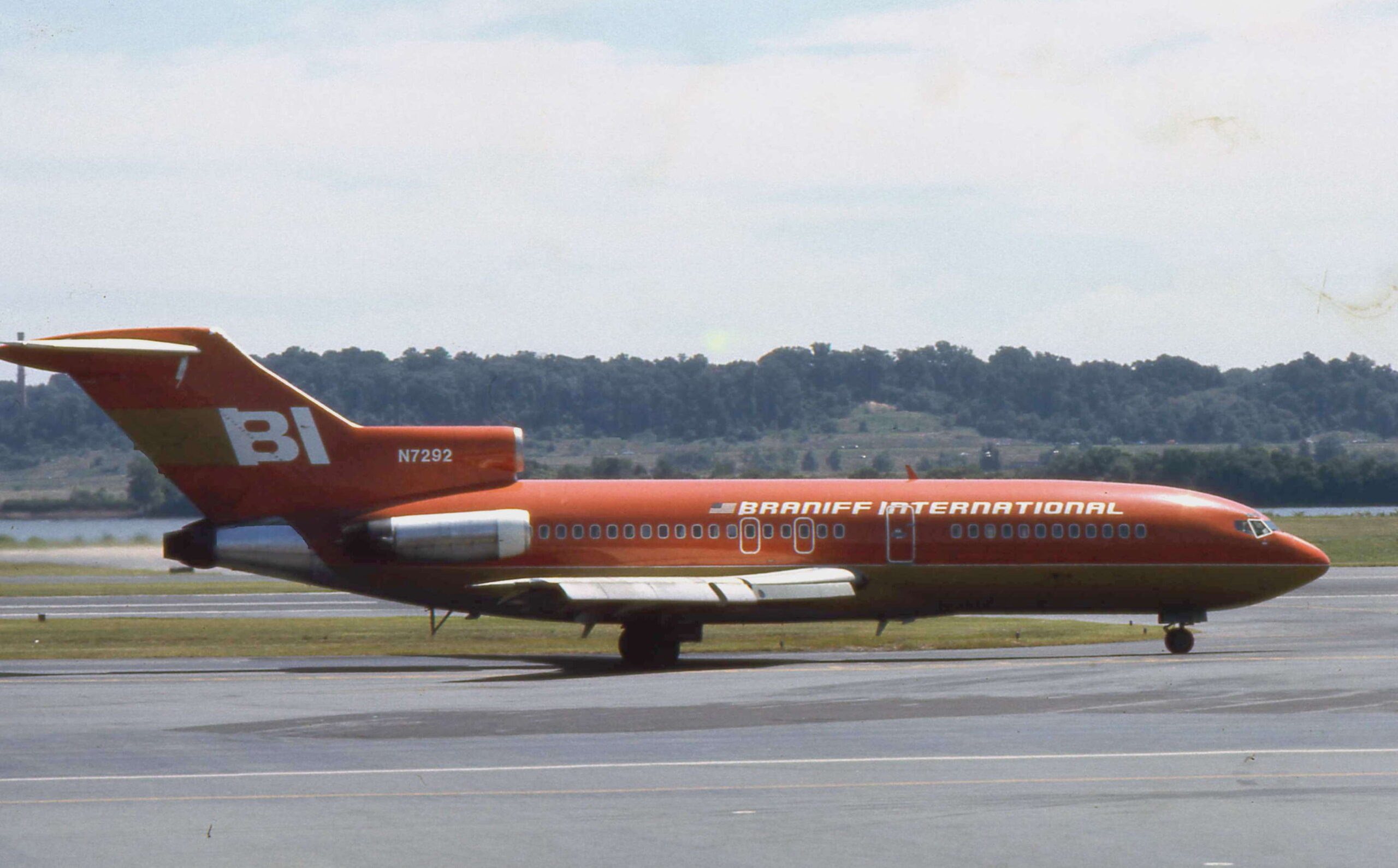
The Boeing 727 was born from a three‑way compromise between United Airlines, Eastern Air Lines, and American
Airlines. Each carrier had different requirements: United wanted a four‑engine aircraft capable of operating
from its high‑altitude Denver hub; American preferred a twin‑engine design for efficiency; and Eastern needed
more than two engines to meet overwater route requirements to the Caribbean. The result was a unique solution:
a three‑engine jet with excellent short‑field performance and the ability to serve a wide range of routes.
In the early design phase, Boeing explored a collaboration with de Havilland, who were developing the
D.H.121 Trident — another trijet. Representatives from both companies met, but the partnership quickly
collapsed. De Havilland wanted Boeing to build the Trident under licence, while Boeing insisted on a
six‑abreast cabin and superior short‑runway capability. The two visions were incompatible, and Boeing
continued independently.
Engine selection came down to two candidates: the Rolls‑Royce RB‑163 Spey and the Pratt & Whitney JT8D.
Although the Spey was lighter and further along in development, Eastern Air Lines strongly favoured the
JT8D. Boeing ultimately chose the Pratt & Whitney engine, which became the sole powerplant for all 727
variants.
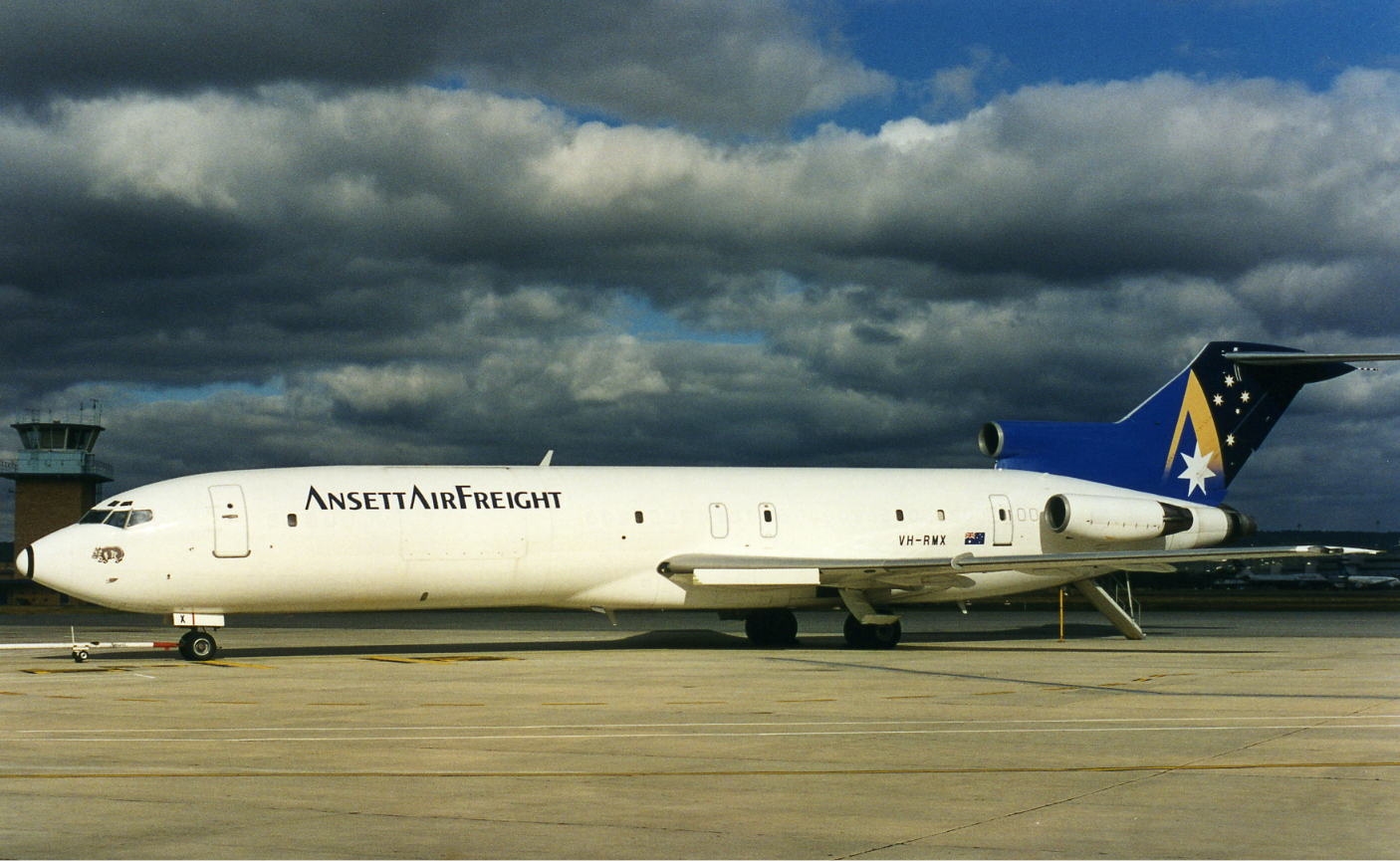
The JT8D was a low‑bypass engine, making the 727 one of the noisiest commercial airliners of its era.
Noise abatement laws introduced in the 1970s led to the development of hush‑kits, allowing the 727 to
continue operating at airports with stricter noise regulations.
The first Boeing 727‑100 flew on 9 February 1963. After certification, Eastern Air Lines received the
first production aircraft on 1 February 1964. The stretched 727‑200 followed, flying for the first time
in July 1967 and entering service with Northwest Airlines in December that same year.
The 727 became one of Boeing’s greatest commercial successes. For most of its 21‑year production run,
it was the world’s best‑selling jetliner — a title it held until the Boeing 737 overtook it in the early
1990s. When production ended in 1984, Boeing had built 1,832 aircraft, delivering 1,831 and retaining one
for internal use.
By mid‑2013, 188 Boeing 727s were still in service with airlines, government agencies, and freight
operators. The aircraft has had a turbulent operational history: by mid‑2015, it had been involved in
336 incidents, including 118 hull losses. These events resulted in 4,209 fatalities, with 345 deaths
linked to 178 hijackings — a reflection of the era before modern aviation security standards.
Specifications
The 727‑200 was 20 feet longer than the 727‑100, with fuselage extensions ahead of and behind the wing.
The Advanced version featured strengthened structure,
more powerful engines, and optional long‑range fuel capacity.
The Boeing 727 family consisted of two primary variants — the original 727‑100 and the stretched 727‑200 —
with the 727‑200 Advanced offering increased payload, more powerful engines, and optional long‑range fuel
tanks. Additional specialised versions included the 727‑100C Convertible and the 727‑100QC Quick Change,
which allowed rapid switching between passenger and cargo operations. The 727 was known for its clean
aerodynamic lines and high performance, capable of reaching speeds near Mach 0.9.
As noise regulations tightened, hush‑kits were added to the JT8D engines, allowing the 727 to continue
operating at airports with stricter noise limits. Despite its eventual retirement from most passenger
fleets, the 727 remained a popular freighter and government aircraft for decades.
Boeing 727 Specifications Table
| Boeing 727 Specs | Boeing 727‑100 | Boeing 727‑200 | Boeing 727‑200 Advanced |
|---|---|---|---|
| Range (fully laden) | 4,300 km (2,300 nmi) | 3,100 km (1,700 nmi) | 3,500 km (1,900 nmi) Standard 4,800 km (2,600 nmi) Option |
| Seating (Typical / Max) | 294 Typical, 131 Max |
145 Typical, 189 Max | |
| Flight Crew | 2 pilots + 1 flight engineer = 3 | ||
| Length | 40.59 m (133 ft 2 in) | 46.69 m (153 ft 2 in) | |
| Wingspan | 32.92 m (108 ft 0 in) | ||
| Wing Area | 153 m² (1,650 ft²) | ||
| Wing Sweep Back | 32 degrees | ||
| Height (top of tail) | 10.52 m (34 ft 6 in) | ||
| Fuselage Width (Exterior) | 3.8 m (12 ft 4 in) | ||
| Cabin Width (Interior) | 3.51 m | ||
| Undercarriage | 2 × 2‑wheel main bogies + 2‑wheel nose gear | ||
| Typical Operating Empty Weight | 36,560 kg (80,602 lb) | 44,600 kg (98,400 lb) | 46,700 kg (102,900 lb) |
| Cruising Speed (Max) | Mach 0.9 | ||
| Cruising Speed (Typical) | Mach 0.84 | ||
| Fuel Capacity | 29,069 L (7,680 gal) | 30,620 L (8,090 gal) | 40,060 L (10,585 gal) |
| Maximum Take‑off Weight | 77,000 kg (170,000 lb) | 83,800 kg (184,800 lb) | 95,000 kg (209,500 lb) |
| Take‑off Distance (MTOW, sea‑level ISA) | 2,500 m (8,300 ft) | 3,000 m (10,000 ft) | 2,600 m (8,500 ft) |
| Service Ceiling | 11,000 m (36,100 ft) | 13,000 m (42,000 ft) | 13,000 m (42,000 ft) |
| Maximum Fuel Capacity | 29,100 L (7,680 US gal) | 30,600 L (8,090 US gal) | 30,600 L (8,090 US gal) Standard 39,800 L (10,520 US gal) Option |
| Engines × 3 | Pratt & Whitney JT8D‑1 62 kN (14,000 lbf) |
Pratt & Whitney JT8D‑9 64 kN (14,500 lbf) |
Pratt & Whitney JT8D‑17R 77 kN (17,400 lbf) |
| Price at time of production | Initially $4.25 million; by 1982, $22 million | ||
Assembly
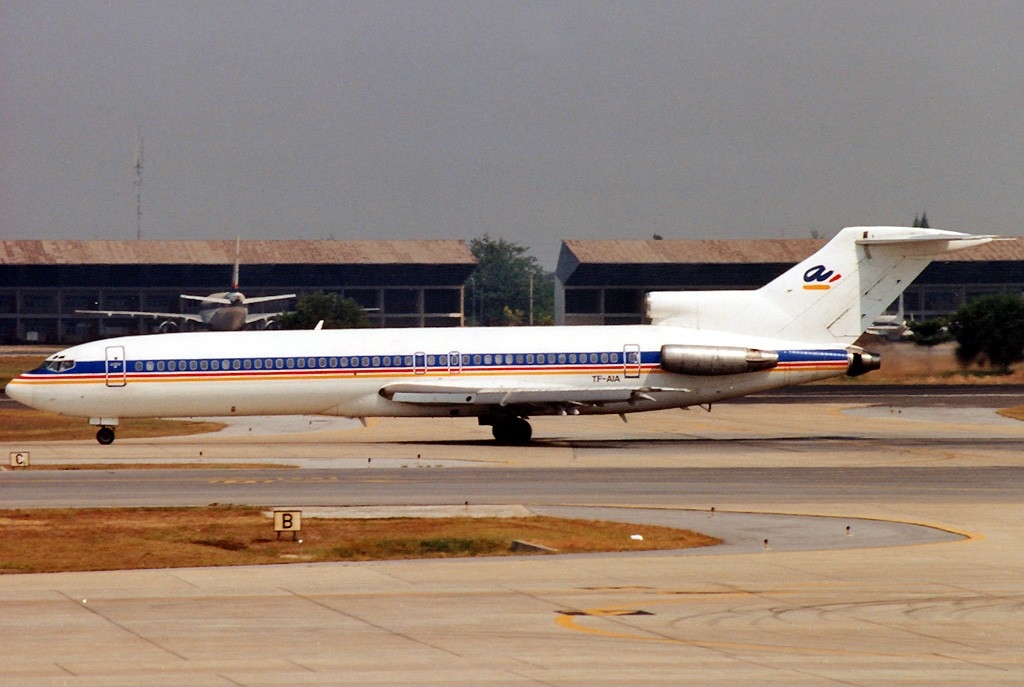
The Boeing 727 was assembled at Boeing’s Renton facility in Washington State, the same plant responsible
for producing the Boeing 707 and later the 737. The 727’s design philosophy centred on creating an aircraft
capable of operating from short runways, remote airfields, and airports lacking modern ground support
equipment. This required a combination of aerodynamic innovation, structural efficiency, and self‑sufficiency
features built directly into the airframe.
One of the most distinctive aspects of the 727’s assembly was its rear‑mounted trijet configuration. With
two engines mounted on the fuselage and a third engine fed by an S‑duct at the base of the vertical stabiliser,
the wings were left completely unobstructed. This allowed Boeing to install full‑span leading‑edge slats and
triple‑slotted flaps, giving the 727 exceptional lift and short‑field performance. These components were
precision‑built and installed during final assembly to ensure the aircraft met its demanding performance
targets.
The 727 was also designed to be self‑reliant at airports with limited infrastructure. Boeing integrated an
auxiliary power unit (APU) into the aircraft — the first time Boeing had done so. Uniquely, the APU was
mounted in the centre of the fuselage between the main landing gear bays, rather than in the tail cone,
which was occupied by the number‑two engine. This required careful structural reinforcement and routing
during assembly to ensure accessibility and reliability.
Another notable assembly feature was the built‑in rear air‑stair. Installed beneath the tail section, this
drop‑down stairway allowed passengers to board and disembark without external equipment. Early versions
could even be opened in flight, a capability later disabled by the Cooper Vane — a small aerodynamic device
added after 1971 to prevent the air‑stair from deploying while airborne.
The 727’s landing gear was also engineered for rugged operations. The nose gear was fitted with brakes —
unusual for commercial aircraft — to improve stopping performance on short or gravel runways. This required
additional hydraulic plumbing and structural reinforcement during assembly.
Throughout its production life, Boeing refined the assembly process to accommodate new variants, including
the stretched 727‑200 and the higher‑performance 727‑200 Advanced. These versions required strengthened
structures, more powerful engines, and optional long‑range fuel tanks, all integrated during the assembly
phase at Renton.
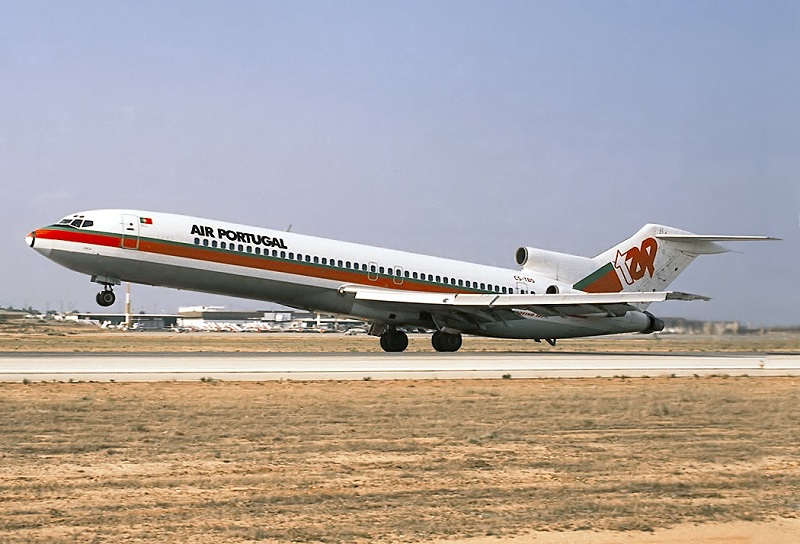
The Boeing 727’s assembly process reflected the aircraft’s mission: a versatile, powerful, and self‑sufficient
jetliner capable of serving airports that larger aircraft could not. Its unique trijet layout, advanced
high‑lift systems, and integrated ground‑support features made it one of the most adaptable airliners of its
time.
Orders and Deliveries
The Boeing 727 was one of the most commercially successful jetliners of its era, with customers spanning
every continent. Its ability to operate from short runways, remote airfields, and busy city airports made
it attractive to both major carriers and smaller regional airlines. Below is the complete list of airline
orders and deliveries as recorded during the aircraft’s production life.
| Airline Customers | Orders | Deliveries |
|---|---|---|
| Aerolineas Argentinas | 7 | 7 |
| Air Algerie | 11 | 11 |
| Air Asia Company | 2 | 2 |
| Air Canada | 39 | 39 |
| Air Charter | 2 | 2 |
| Air Florida | 5 | 5 |
| Air France | 29 | 29 |
| Air Jamaica (See CBL) | 4 | 4 |
| Air Serbia | 11 | 11 |
| Airlift International | 4 | 4 |
| Airline of the Islamic Republic of Iran | 10 | 9 |
| Alaska Airlines | 7 | 7 |
| Alitalia | 18 | 18 |
| All Nippon Airways | 36 | 36 |
| American Airlines | 167 | 167 |
| American Flyers Airlines | 2 | 2 |
| Ansett Australia | 22 | 22 |
| Ariana Afghan Airlines | 2 | 2 |
| Avianca | 9 | 9 |
| Avianca Costa Rica | 2 | 2 |
| Braniff Airlines | 122 | 97 |
| Business Aerotech | 1 | 1 |
| BWIA | 3 | 3 |
| China Airlines | 3 | 3 |
| Condor Flugdienst | 8 | 8 |
| CP Air | 6 | 6 |
| Cruzeiro | 3 | 3 |
| Delta Air Lines | 119 | 116 |
| Dominicana Airlines | 3 | 2 |
| Dubai Air Wing | 1 | 1 |
| Eastern Air Lines | 167 | 163 |
| Ethiopian Airlines | 3 | 3 |
| Executive Jet Aviation | 2 | 2 |
| FAA | 1 | 1 |
| FAUCETT | 1 | 1 |
| Federal Government of Nigeria | 1 | 1 |
| FedEx Express | 15 | 15 |
| Frontier Airlines | 10 | 8 |
| GATX Financial Corporation | 2 | 2 |
| Handlingair Establishment | 1 | 1 |
| Hashemite Kingdom of Jordan | 1 | 1 |
| Hughes Airwest | 15 | 13 |
| Iberia Airlines | 37 | 37 |
| Icelandair | 2 | 2 |
| International Lease Finance Co. | 4 | 4 |
| Iraqi Airways | 6 | 6 |
| Itel Air | 2 | 2 |
| Japan Airlines | 12 | 12 |
| Japan Domestic Airlines | 2 | 2 |
| Kuwait Airways | 4 | 4 |
| LAB | 4 | 4 |
| Lake Central Airlines | 1 | 0 |
| LATAM Airlines Group | 4 | 4 |
| Libyan Airlines | 11 | 11 |
| Lufthansa | 53 | 53 |
| Mexicana | 45 | 39 |
| Mohawk Airlines | 3 | 0 |
| National Airlines | 38 | 38 |
| NEA Holdings | 21 | 21 |
| Nepal Airlines Corporation | 1 | 1 |
| Nigeria Airways | 2 | 2 |
| Nordair | 1 | 0 |
| Northwest (Merged with Delta) | 85 | 85 |
| Olympic Airlines | 6 | 6 |
| Ozark Air Lines | 2 | 2 |
| PACE Airlines | 1 | 1 |
| Pacific Air Lines | 3 | 3 |
| Pacific Northern | 4 | 0 |
| Pacific Southwest Airlines | 39 | 39 |
| Pan Am World Airways | 43 | 35 |
| Pelita Air Service | 1 | 0 |
| Qatar Airways | 1 | 1 |
| Rafic B. Hariri | 1 | 1 |
| Republic Airlines | 7 | 7 |
| Republic of Cameroon | 1 | 1 |
| Republic of Senegal | 1 | 1 |
| Royal Air Maroc | 8 | 8 |
| Royal Jordanian | 7 | 7 |
| SABENA Aerospace | 5 | 5 |
| Singapore Airlines | 10 | 10 |
| South African Airways | 9 | 9 |
| Southern Air Transport | 1 | 1 |
| Sterling Air A/S | 8 | 8 |
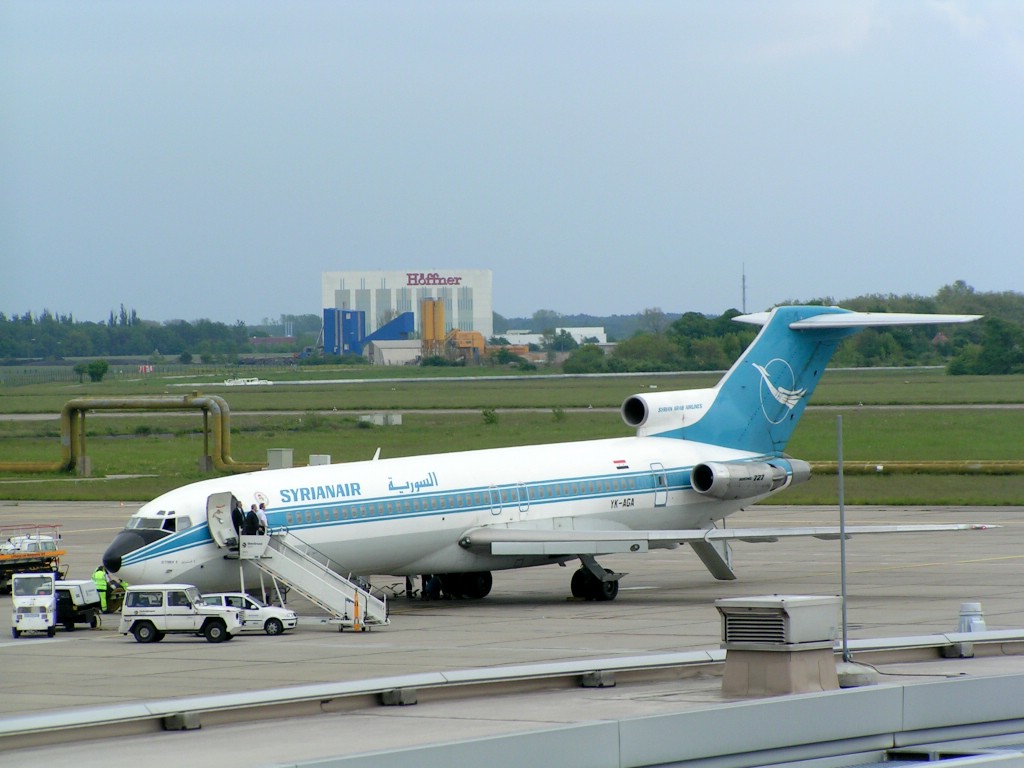
| Syrianair | 3 | 3 |
| TAME | 1 | 1 |
| TAP Portugal | 11 | 11 |
| Tigerair | 4 | 4 |
| Trans Carib Air | 3 | 1 |
| Transair Sweden | 3 | 3 |
| Transamerica Airlines | 2 | 2 |
| Trans‑Australia Airlines | 18 | 18 |
| TUI Group | 3 | 3 |
| TunisAir | 10 | 10 |
| Turkish Airlines | 10 | 10 |
| TWA | 92 | 92 |
| United Airlines | 281 | 281 |
| US Airways, Inc. | 12 | 12 |
| Varig Airlines | 4 | 4 |
| VASP Airlines | 6 | 6 |
| Wardair | 1 | 1 |
| WEDGE Group | 1 | 1 |
| Western Airlines | 50 | 46 |
| World Airways, Inc. | 6 | 6 |
| Yemenia | 6 | 5 |
| Grand Total | 1900 | 1831 |
Legacy
The Boeing 727 left an enduring legacy as one of the most influential and versatile jetliners of the
20th century. Its unique trijet configuration, advanced high‑lift systems, and ability to operate from
short and remote runways opened new possibilities for airlines around the world. For many carriers, the
727 provided the first opportunity to offer direct jet services to smaller cities and regional destinations
that previously relied on turboprops or required connections through major hubs.
The aircraft’s rugged design, reliability, and self‑sufficiency made it a favourite among pilots and
operators. Features such as the built‑in rear air‑stair and Boeing’s first use of an auxiliary power unit
(APU) allowed the 727 to function independently at airports with limited infrastructure. These innovations
set new standards for future aircraft designs.
The 727 also played a significant role in shaping global airline fleets. For most of its production life,
it was the world’s best‑selling jetliner, a title it held until the Boeing 737 surpassed it in the early
1990s. Its widespread adoption by major airlines — including Eastern, United, American, Lufthansa, ANA,
and many others — cemented its place as a cornerstone of early jet‑age expansion.
Despite its success, the 727 eventually faced challenges from newer aircraft featuring high‑bypass engines,
lower operating costs, and two‑crew flight decks. Noise regulations introduced in the 1970s and 1980s also
forced operators to retrofit hush‑kits to keep the aircraft compliant. As technology advanced, the 727
gradually transitioned from frontline passenger service to roles in cargo transport, charter operations,
and government use.
Even decades after production ended in 1984, the 727 continued to fly in various capacities. Its longevity
is a testament to Boeing’s engineering and the aircraft’s adaptability. For many aviation enthusiasts, the
727 remains an icon — a symbol of the golden age of jet travel, known for its distinctive profile, powerful
performance, and unmistakable roar of its JT8D engines.
The Boeing 727’s legacy is one of innovation, versatility, and global impact. It connected cities, expanded
airline networks, and helped define modern commercial aviation. Though no longer common in passenger service,
its influence lives on in the aircraft that followed and in the memories of the millions who travelled aboard
this remarkable trijet.